Compounded GLP-1 vs labeled: what the FDA says
Compounded semaglutide and tirzepatide are not generic Wegovy or Zepbound. The FDA rules, the salt-form problem, and dosing-error overdoses explained.
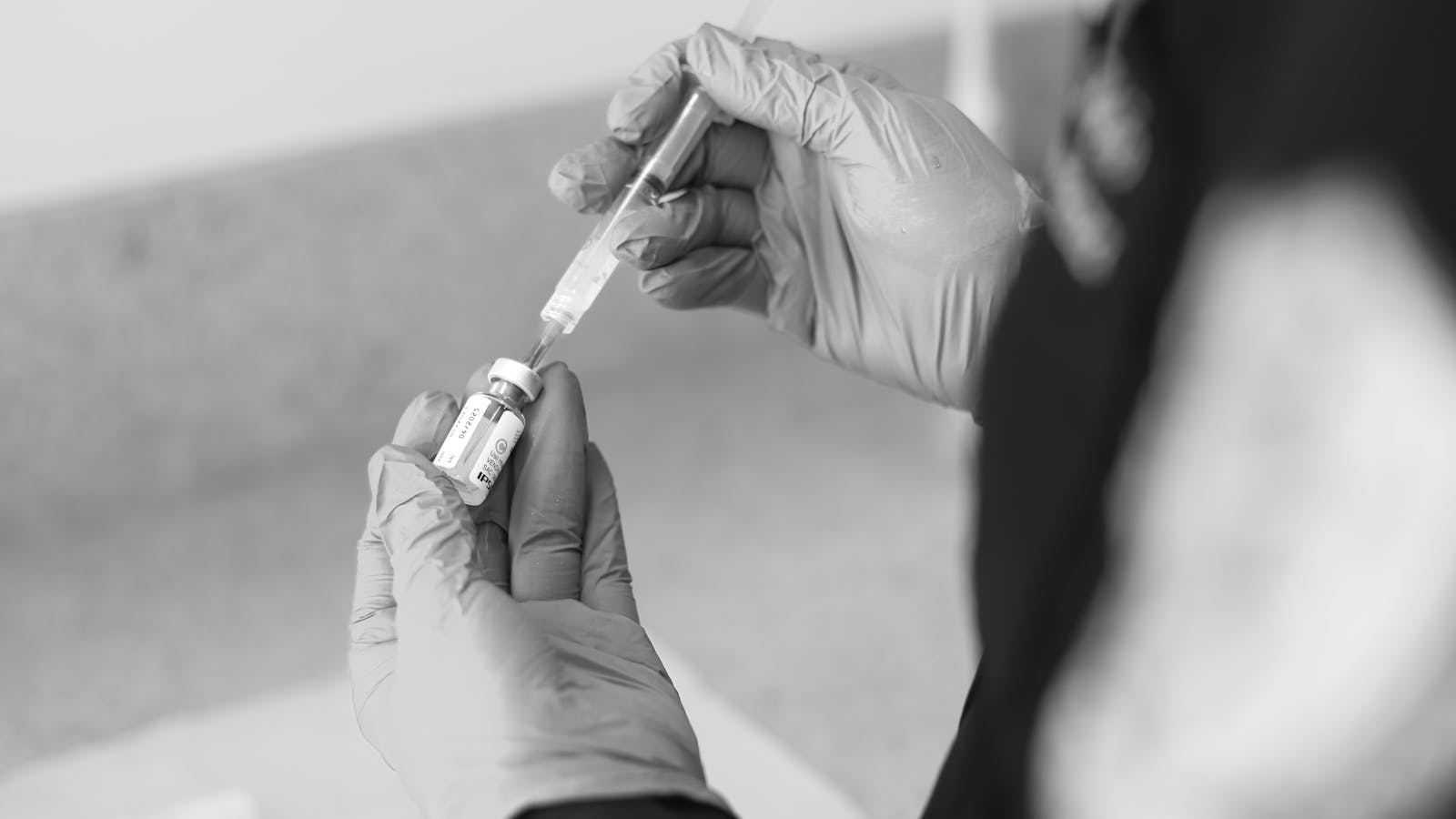
For research and educational purposes only. Not medical advice.
Category: GLP-1. 19 min read. By pepSmart Editorial. . .
Key takeaways
- Branded GLP-1 products (Wegovy, Ozempic, Zepbound, Mounjaro) clear full FDA chemistry-and-manufacturing review. Compounded drugs are not FDA-approved, which means FDA does not verify their safety, effectiveness or quality before they are marketed .
- The shortage basis is gone. Tirzepatide was declared resolved on December 19, 2024 and semaglutide on February 21, 2025, and neither drug now appears on the 503B bulks list or the shortage list . FDA proposed on April 30, 2026 to keep semaglutide, tirzepatide and liraglutide off that bulks list, and the comment docket is open through July 30, 2026 .
- FDA states semaglutide salt forms (sodium, acetate) are different active ingredients than the base used in the approved drugs, and that it is not aware of any lawful basis for their use in compounding .
- In the majority of compounded-semaglutide dosing-error reports FDA received, patients administered five to 20 times the intended dose; separate provider miscalculations produced five to 10 times. Reported overdose events include vomiting, fainting, dehydration, acute pancreatitis and gallstones, some requiring hospitalization . As of May 31, 2026 FDA had 990 adverse-event reports for compounded semaglutide and more than 730 for compounded tirzepatide .
- Compounded product does not inherit the STEP or SURMOUNT efficacy evidence. Semaglutide produced a mean 14.9 percent weight change at week 68 in STEP-1 and tirzepatide 20.9 percent at week 72 on the 15 mg dose in SURMOUNT-1, both measured on the labeled product .
Skip to:
- Should you trust a compounded vial: the tiers
- The regulatory distinction in plain language
- 503A vs 503B: who can compound what
- Still on sale in late 2025: the copy test and the B12 combinations
- The shortage history that opened and closed the lane
- The salt-form problem
- Dosing errors: five to 20 times the intended dose
- What the trial data does and does not transfer
- Telehealth, imports and research-only vials
- What is still unsettled as of July 2026
- Final read
- Frequently asked questions
Should you trust a compounded vial: the tiers
The ranking below sorts by how much identity and manufacturing oversight stands between you and the vial, and by where each tier stands legally in July 2026.
Sorted from most oversight to least. Legal footing is as of July 2026 and is moving.
| Tier | What checks the vial | Legal footing, July 2026 |
|---|---|---|
| Labeled FDA product (Wegovy, Ozempic, Zepbound, Mounjaro) | Full chemistry-and-manufacturing review, post-market safety surveillance, and the STEP and SURMOUNT trial evidence | Approved and marketed |
| 503B outsourcing facility, compounding from bulk drug substance | Registered with FDA, subject to current good manufacturing practice requirements, inspected by FDA on a risk-based schedule | Neither drug is on the 503B bulks list or the shortage list, so this route is shut for them |
| 503A pharmacy, compounding for one patient's prescription | State boards of pharmacy do the day-to-day oversight; no CGMP requirement and no FDA premarket review | Enforcement discretion ran to February 18, 2025 (tirzepatide) and April 22, 2025 (semaglutide) or the district court's preliminary-injunction ruling, whichever was later; after the March 5 and April 24, 2025 denials FDA says it has ended, and the essentially-a-copy limits now govern |
| Salt-form product (semaglutide sodium or acetate) | Different active ingredient from the approved base, and FDA says it has no information on whether the salts share its chemical and pharmacologic properties | FDA is not aware of any lawful basis for their use in compounding |
| Research-only or not-for-human-use vials | No compounding license and no identity check. FDA has found fraudulent labels naming pharmacies that do not exist | FDA has warned companies selling unapproved semaglutide, tirzepatide or retatrutide under research-only labeling |
The regulatory distinction in plain language
Branded GLP-1 products are FDA-approved finished drugs with full chemistry, manufacturing and controls review, post-market safety surveillance and labeled indications . Compounded GLP-1 preparations are made by 503A pharmacies for individual prescriptions or by 503B outsourcing facilities, and FDA does not verify their safety, effectiveness or quality before they are marketed .
FDA answers the generic question directly: a generic drug is approved under section 505(j) of the FD&C Act and has to establish therapeutic equivalence to the brand, while a compounded drug is not approved by FDA at all . A cheaper compounded vial is its own regulatory category with its own rules, and calling it a generic imports approval and equivalence claims the compounded product never earned.
There is also no generic semaglutide on the US market to compare against. Drugs@FDA lists one abbreviated new drug application for semaglutide injection, ANDA 220314 from Apotex, which received a tentative approval on April 7, 2026 and carries the marketing status None (Tentative Approval) . FDA issues a tentative approval when a generic is ready for approval before the patents or exclusivities on the reference product expire, delays final approval until those are resolved, and states plainly that a tentative approval does not allow the applicant to market the product .
503A vs 503B: who can compound what
- 503A pharmacies: state-licensed. The drug is compounded for an individual patient on receipt of a prescription, state boards of pharmacy handle day-to-day oversight, and the CGMP requirements that apply to outsourcing facilities do not apply here .
- 503B outsourcing facilities: a category created in 2013 by the Drug Quality and Security Act. They register with FDA, are subject to current good manufacturing practice requirements, and are inspected by FDA on a risk-based schedule .
- The bulk-substance restriction: outsourcing facilities are restricted from compounding drugs using a bulk drug substance unless the substance appears on the 503B bulks list, or the drug being compounded is on FDA's drug shortage list at the time of compounding, distribution and dispensing. Tirzepatide and semaglutide currently appear on neither .
- The copies restriction: a 503A compounder may not compound, regularly or in inordinate amounts, drug products that are essentially copies of a commercially available drug product, and FDA generally considers a drug commercially available once its shortage is resolved .
- Biologics are out entirely: biological products are not eligible for the 503A or 503B exemptions, so there is no legal compounding pathway for them .
The July 2026 review of peptide bulk substances runs on the same statutory machinery, which is why the compounding status of research peptides can move the same way GLP-1 status did. That review is covered in the FDA peptide compounding review.
Still on sale in late 2025: the copy test and the B12 combinations
Compounded GLP-1 was still being sold months after the last wind-down date passed in May 2025. What separates a lawful preparation from an unlawful one now is FDA's definition of a copy. FDA considers a compounded product essentially a copy when it has the same active ingredient as the commercially available drug in the same, similar or an easily substitutable strength, and the commercially available product can be used by the same route, unless a prescriber determines and documents that the compounded product contains a change producing a significant difference for an identified individual patient .
FDA then works the additive case through in its own example. A product combining semaglutide API with another API such as vitamin B12 can still be essentially a copy when the route of administration is the same and the amounts of semaglutide and B12 are within 10 percent of the strengths of the respective commercially available products . FDA also states it does not intend to act against a compounder for compounding an essentially-a-copy product regularly or in inordinate amounts if the compounder fills four or fewer prescriptions of that product in a calendar month .
Those two rules are the test any post-shortage vial has to pass, and one published study has measured what was actually on offer after they took effect. A cross-sectional secret-shopper study of brick-and-mortar weight-loss clinics and medical spas in West Virginia and Oklahoma, sampled from August to October 2025 (months after the last wind-down date), found the products still on offer .
Secret-shopper sample of 75 businesses in West Virginia and Oklahoma, August to October 2025, which named 23 supplier facilities. The study reports denominators of 21 for the sterile-licensing check and 22 for the disciplinary check. It gives the warning-letter row as 1 facility at 4.3 percent with no denominator stated, so the 23 shown there is inferred from that share of the 23 identified suppliers. Two states, not a national estimate.
| What the study counted | Number | Share |
|---|---|---|
| Clinics and medical spas offering compounded GLP-1 RAs | 75 | the full sample |
| Offering a GLP-1 combined with B vitamins | 42 | 56.0 percent |
| Offering an oral compounded GLP-1 formulation | 7 | 9.3 percent |
| Supplier facilities not licensed for sterile compounding | 4 of 21 | 19.0 percent |
| Supplier facilities with multiple FDA warning letters since 2023 | 1 of 23 | 4.3 percent |
| Supplier facilities under state disciplinary action since 2023 | 3 of 22 | 13.6 percent |
DiStefano MJ et al, JAMA Health Forum 2026
More than half the businesses sampled sold a combination product, the same shape FDA's worked example addresses. The study counted what was offered; it did not test any of those products against the copy standard. Whether a given vial sits inside or outside the law still comes down to the strength comparison, the documented prescriber determination, and how many of those prescriptions the compounder fills in a calendar month .
The shortage history that opened and closed the lane
Both drugs went into FDA shortage status in 2022 on demand FDA describes as increased, and the shortage listing was the legal hook that let 503A and 503B compounders make copies . Check the current status on FDA's shortage database before acting on any of this, with one caveat: the database currently carries a banner saying it is experiencing technical difficulties and that some of the information it holds may not reflect current supply status .
FDA declared the tirzepatide shortage resolved on December 19, 2024 and the semaglutide shortage resolved on February 21, 2025. Compounders sued, and the district court denied their preliminary-injunction motions in Outsourcing Facilities Association v. FDA, on March 5, 2025 for tirzepatide and April 24, 2025 for semaglutide .
Those determinations set wind-down dates, and FDA later wrote all four of them with the same court-decision condition attached. For tirzepatide, 503A compounding discretion ran until February 18, 2025 and 503B until March 19, 2025, each of those or the date of the district court's preliminary-injunction decision, whichever was longer. For semaglutide the 503A date was April 22, 2025 and the 503B date May 22, 2025, each of those or the court's decision date, whichever was later .
The denials above are what closed the 503A side. After the March 5, 2025 ruling FDA stated that for a state-licensed pharmacy or physician compounding tirzepatide under 503A the period of enforcement discretion had ended, and it said the same for semaglutide after the April 24, 2025 ruling . On the 503B side FDA's April 28, 2025 update restated May 22, 2025 as the semaglutide end point . That sequence is the biggest regulatory change for compounded GLP-1, and it is why what was allowed in 2024 is mostly not allowed now.
As of July 2026 FDA has moved to close the other door. On April 30, 2026 it proposed to exclude semaglutide, tirzepatide and liraglutide from the 503B bulks list, the list that lets outsourcing facilities compound from bulk drug substance, after finding no clinical need for those three . If that proposal is finalized, the bulk-compounding route closes for these drugs on top of the shortage basis that already ended.
The salt-form problem
Some compounded products used semaglutide sodium or semaglutide acetate instead of the semaglutide base in the approved product. FDA states that these salt forms are different active ingredients than are used in the approved drugs, that it does not have information on whether the salts have the same chemical and pharmacologic properties as the active ingredient in the approved drug, and that it is not aware of any lawful basis for their use in compounding .
For a buyer, that means a vial labeled semaglutide from a compounded source may hold a salt form of different molecular weight whose clinical equivalence has never been characterized. The milligram-to-milligram conversion people carry over from the branded pen is not strictly correct for a salt-form preparation, which is one more way the dose math goes wrong.
Dosing errors: five to 20 times the intended dose
FDA issued an explicit alert on dosing errors with compounded semaglutide, current as of July 26, 2024, covering both patient and prescriber errors . The two error classes are different and the numbers attached to them are different.
- Patients self-drawing from a multiple-dose vial: the majority of reports. Patients administered five to 20 times the intended dose, and most reports indicated the patient was unfamiliar with measuring the dose using a syringe. In several cases patients told to draw 5 units (0.05 mL) from a U-100 insulin syringe drew 50 units instead .
- Providers miscalculating the conversion: several reports describe health care providers converting milligrams to units or milliliters incorrectly, which resulted in five to 10 times the intended dose. One provider meant to prescribe 0.25 mg (5 units) and wrote 25 units; another wrote 20 units instead of 2 units, affecting three patients .
- What the overdoses looked like: gastrointestinal effects such as nausea, vomiting and abdominal pain, plus fainting, headache, migraine, dehydration, acute pancreatitis and gallstones. Some patients sought medical attention or required hospitalization .
- Where severe hypoglycemia comes from: the approved semaglutide labeling, which describes it among overdose effects reported with other GLP-1 receptor agonists. FDA's tally of the compounded reports does not list it .
Five mechanisms produce those errors.
- Concentration mismatch: a compounded vial may not match the branded product's mg per mL, and a single compounder may offer several concentrations .
- Units confusion: insulin-syringe U-100 markings are insulin units (0.01 mL each), not milligrams, so a user converting from a brand pen can misread by an order of magnitude (a GLP-1 conversion calculator makes the mg-to-units math explicit).
- Reconstitution variability: powder formulations need the correct diluent volume, and small errors compound across repeated draws.
- Salt-form math: a branded mg conversion does not necessarily equal the mg of active base in a salt-form preparation .
- Stale vial: peptide stability in a multi-dose reconstituted vial is not the same as a sealed pen cartridge, and concentration drifts over weeks.
What the trial data does and does not transfer
The efficacy claims for branded GLP-1s come from STEP and SURMOUNT . Compounded versions were not in those trials. Pharmacology that depends on the molecule itself, such as receptor binding and the half-life built into the structure, plausibly carries over when the molecule is genuinely the same. Pharmacology that depends on formulation does not necessarily carry over, and FDA's manufacturing review is the only routine check on excipients, stability and fill volume for the labeled product .
Telehealth, imports and research-only vials
Much compounded GLP-1 dispensing runs through telehealth platforms, and FDA publishes a red-flag list for that channel: a company claiming the compounded drug is the same as an FDA-approved drug, prices that look too good to be true, medicine that arrives looking different from what the site pictured or in damaged packaging, no screening and prescription by a licensed doctor, nobody available to answer questions afterward, spelling errors or an incorrect pharmacy address on the label, and a pharmacy name that looks fraudulent . Promotion by a compounder still has to be truthful, non-misleading and accurate under federal law, and FDA says it monitors those materials .
The clinical model differs from in-person prescribing, and one of FDA's own dosing-error reports shows how that lands: a patient could not get clear dosing instructions from the telemedicine provider who prescribed the compounded semaglutide, searched online for medical advice instead, and took five times the intended dose .
A separate channel sells research-only or not-for-human-use semaglutide and tirzepatide vials outside any compounding license. FDA has warned companies that illegally sold unapproved drugs containing semaglutide, tirzepatide or retatrutide under research-purposes or not-for-human-consumption labeling, sold directly to consumers for human use with dosing instructions . The research-only label carries no regulatory meaning and gives the buyer no protection. Four things in this tier can still be checked before the needle goes in.
- Does the pharmacy on the label exist? FDA is aware of fraudulent compounded semaglutide and tirzepatide where the compounding pharmacy named on the label does not exist, and other cases where the label carries the name of a licensed pharmacy that did not compound the product .
- Did it arrive warm? Injectable GLP-1 drugs need refrigeration per their package inserts, FDA has received complaints of compounded GLP-1 arriving warm or with inadequate ice packs, and it recommends not using any injectable GLP-1 that arrives warm or insufficiently refrigerated .
- Where did the API come from? FDA established green list import alert 66-80 to stop GLP-1 active pharmaceutical ingredients with potential quality concerns from entering the US supply chain, while leaving imports from compliant manufacturers alone .
- Is there a certificate worth reading? A purity number alone says nothing about identity or sterility. How to read a peptide COA and vetting a provider cover what a real test does and does not show.
What is still unsettled as of July 2026
- The 503B bulks decision is not final. FDA proposed the exclusion on April 30, 2026 and says it will consider submitted comments before making a final determination; the comment period closes July 30, 2026 .
- National scale is unmeasured. The published measurement available here is a secret-shopper study of 75 businesses in two states over three months of 2025, whose stated objective is to characterize the products, care and suppliers rather than to size the market nationally .
- The adverse-event counts are a floor with no denominator. FDA says reports from compounded versions are likely underreported because non-outsourcing-facility pharmacies are not required to submit them, and it publishes no exposure denominator alongside the counts .
- Whether the salt forms behave like the base is unknown. FDA's stated position is that it does not have information on whether they share the approved ingredient's chemical and pharmacologic properties .
- Generic timing is unresolved. The one semaglutide ANDA on Drugs@FDA holds a tentative approval, and final approval waits until the patent and exclusivity issues on the reference product are resolved .
Final read
The compounded GLP-1 supply grew during the 2022 shortage and lost its legal foundation across 2024 and 2025, and FDA has now proposed to shut the bulk route as well . What survives runs on narrow conditions: a documented prescriber determination that an individual patient needs a significant difference from the commercially available product, and the four-or-fewer-prescriptions-per-month enforcement position . Neither is visible on a vial, so the practical question for a buyer is which tier the vial came from and what evidence backs the number on the label.
If you want a say in the bulks decision, the docket is open until July 30, 2026 .
For research and educational purposes only. Not medical advice.
pepSmart has not commissioned independent clinical review of this article.
For how this article was sourced and reviewed, see Editorial process and contributor disclosure and Sourcing posture.
Spot an error? Email corrections via /about.
Sources: 14 entries, all primary canon (FDA, the Federal Register via GovInfo, PubMed, DailyMed), last reviewed 2026-07-21.
Related tools
- Tirzepatide dose calculator - Run tirzepatide-focused vial draw math.
- GLP-1 conversion calculator - Convert a GLP-1 mg dose to U-100 units and ml.
- GLP-1 ramp planner - Preview a linear educational dose-step table.
- Peptide half-life calculator - Estimate single-dose decay from cited half-life constants.
- PK simulator overview - Public overview of the Pro pharmacokinetic simulator.
- Semaglutide dose calculator - Run semaglutide-focused vial draw math.
Frequently asked questions
- Is compounded semaglutide the same as Wegovy or Ozempic?
- No. Compounded drugs are not FDA-approved, so FDA does not verify their safety, effectiveness or quality before they are marketed, and they are not generics either: a generic has to establish therapeutic equivalence to the brand under an approved application. The STEP and SURMOUNT trial results were measured on the labeled products.
- Is compounded semaglutide still legal in 2026?
- The shortage basis that made routine compounding lawful is gone. Tirzepatide was declared resolved in December 2024 and semaglutide in February 2025, enforcement discretion ended in 2025, and neither drug is on the 503B bulks list. Narrow lawful compounding still exists, mainly a documented prescriber determination that a patient needs a change from the commercially available product.
- Does mixing vitamin B12 into a compounded GLP-1 put it outside the copy rules?
- Not by itself. FDA addresses that case directly and says a product combining semaglutide with another active ingredient such as vitamin B12 can still count as essentially a copy of a commercially available drug when the route of administration is the same and the amounts of semaglutide and B12 sit within 10 percent of the strengths of the respective commercially available products. Combination vials are common: in a two-state secret-shopper study sampled in late 2025, 42 of 75 businesses selling compounded GLP-1 (56.0 percent) offered a B-vitamin combination.
- What is semaglutide sodium or semaglutide acetate?
- They are salt forms of semaglutide. FDA says they are different active ingredients than the base used in the approved drugs, that it does not have information on whether they share the same chemical and pharmacologic properties, and that it is not aware of any lawful basis for their use in compounding.
- How big were the compounded semaglutide dosing errors FDA documented?
- In the majority of reports, patients drawing from a multiple-dose vial administered five to 20 times the intended dose. Separate reports of providers converting milligrams to units incorrectly produced five to 10 times. Reported overdose events include vomiting, fainting, dehydration, acute pancreatitis and gallstones, and some patients were hospitalized.
- Can a compounding pharmacy legally make retatrutide?
- No. FDA states that retatrutide and cagrilintide cannot be used in compounding under federal law, that they are not components of FDA-approved drugs, and that they have not been found safe and effective for any condition. FDA has warned telehealth companies, API distributors and outsourcing facilities over retatrutide.
References
- [1] WEGOVY (semaglutide) injection, US Prescribing Information (DailyMed): FDA-approved labeling for a branded semaglutide product (DailyMed (FDA label))
- [2] ZEPBOUND (tirzepatide) injection, US Prescribing Information (DailyMed): FDA-approved labeling for a branded tirzepatide product (DailyMed (FDA label))
- [3] FDA's Concerns with Unapproved GLP-1 Drugs Used for Weight Loss (salt forms are different active ingredients with no known lawful basis for compounding; retatrutide and cagrilintide cannot be used in compounding; import alert 66-80; fraudulent labels; warm-shipping complaints; 990 compounded semaglutide and more than 730 compounded tirzepatide adverse-event reports as of May 31, 2026) (FDA)
- [4] FDA alerts health care providers, compounders and patients of dosing errors associated with compounded injectable semaglutide products (content current as of July 26, 2024; majority of reports five to 20 times the intended dose, provider miscalculations five to 10 times) (FDA)
- [5] Compounding and the FDA: Questions and Answers (compounded drugs are not FDA-approved; generic drugs are approved under 505(j) and compounded drugs are not; outsourcing facilities created in 2013, CGMP and risk-based FDA inspection; biologics ineligible) (FDA)
- [6] Wilding et al. NEJM 2021: STEP-1 once-weekly semaglutide in obesity, mean weight change -14.9 percent at week 68 (PMID 33567185) (PubMed)
- [7] Jastreboff et al. NEJM 2022: SURMOUNT-1 tirzepatide for obesity, mean weight change -20.9 percent at week 72 on 15 mg (PMID 35658024) (PubMed)
- [8] DiStefano MJ, Tilley A, Paratane D, Gyimah Gyamfi H, Moore GD, Nair KV. Postshortage Compounded GLP-1 RA Market in 2 States With Potentially High Demand. JAMA Health Forum 2026 (PMID 42467450) (PubMed)
- [9] FDA drug shortages database (current GLP-1 status; front page carries a technical-difficulties notice) (FDA)
- [10] FDA clarifies policies for compounders as national GLP-1 supply begins to stabilize (tirzepatide shortage resolved December 19, 2024; semaglutide resolved February 21, 2025; 503A and 503B wind-down dates; essentially-a-copy test and the vitamin B12 within-10-percent example; four-or-fewer prescriptions per calendar month) (FDA)
- [11] FDA Proposes to Exclude Semaglutide, Tirzepatide, and Liraglutide on 503B Bulks List (announced April 30, 2026; no clinical need identified; comments considered before a final determination) (FDA)
- [12] Federal Register, Volume 91, Issue 122 (June 26, 2026), pages 38719 to 38720: List of Bulk Drug Substances for Which There Is a Clinical Need Under Section 503B; Extension of Comment Period (Docket No. FDA-2018-N-3240, comments due July 30, 2026) (Federal Register via GovInfo (GPO))
- [13] Drugs@FDA record for ANDA 220314 (Apotex Inc, semaglutide injection): tentative approval dated April 7, 2026, marketing status None (Tentative Approval) (FDA (accessdata))
- [14] Drugs@FDA Glossary of Terms: tentative approval is issued when a generic drug product is ready for approval before patents or exclusivities expire, and does not allow the applicant to market the product (FDA)
For research and educational purposes only. Not medical advice.