For research and educational purposes only. Not medical advice.
Heart rate variability: what the literature supports and where it overpromises
Heart rate variability reflects beat-to-beat variation in R-R intervals and is a useful proxy for cardiac autonomic balance. Plews et al. 2013 r…
For research and educational purposes only. Not medical advice.
Category: Recovery. 8 min read. By pepSmart Editorial. .
Key takeaways
- HRV measures the variability in time between heartbeats. The most commonly reported time-domain metric is RMSSD (root mean square of successive differences); frequency-domain metrics include high-frequency power (HF, parasympathetic) and the LF/HF ratio.
- Plews et al. 2013 systematic review concluded that HRV-guided endurance training (adjusting daily intensity based on morning HRV) can produce equal or superior fitness gains compared with predetermined block periodization in well-trained endurance athletes .
- Tsuji 1996 (Framingham Heart Study) and subsequent meta-analyses link low resting HRV to higher all-cause and cardiovascular mortality at the population level .
- Stanley et al. 2013 showed that post-exercise HRV recovery time scales with training intensity and is a useful objective marker of acute autonomic strain .
- Wrist-based optical (PPG) HRV from consumer wearables has higher noise than chest-strap ECG; aggregated week-over-week trends are reasonable, individual single readings are less reliable.
- HRV is highly individual. Useful interpretation requires a personal baseline of 2 to 4 weeks of consistent measurement; comparing absolute HRV between individuals or across very different measurement contexts produces misleading conclusions.
What HRV actually is
Heart rate is not constant. Even at rest, the interval between successive R-waves on an ECG varies by tens of milliseconds beat-to-beat. This variability is driven primarily by the rhythmic interplay between sympathetic and parasympathetic (vagal) cardiac control and is modulated by respiration, baroreceptor activity, and slower hormonal influences.
Common time-domain HRV metrics: SDNN (standard deviation of normal-to-normal R-R intervals), RMSSD (root mean square of successive differences), and pNN50 (percentage of intervals differing from the previous by more than 50 ms). RMSSD is the most-used metric for recovery and consumer-wearable applications because it tracks parasympathetic activity over short measurement windows.
Frequency-domain HRV decomposes the R-R interval signal into power across frequency bands. High-frequency (HF, 0.15 to 0.4 Hz) power reflects parasympathetic respiratory sinus arrhythmia. Low-frequency (LF, 0.04 to 0.15 Hz) power reflects mixed sympathetic and parasympathetic activity. The LF/HF ratio has been used historically as a sympathovagal balance proxy but is now considered less reliable than originally claimed (Billman 2013) .
The prognostic literature
Tsuji et al. 1996 in the Framingham Heart Study cohort showed that lower SDNN was independently associated with higher all-cause mortality over a 2.7-year follow-up, even after adjusting for traditional risk factors. The hazard ratio for the lowest versus highest SDNN quartile was approximately 2.0 .
Subsequent meta-analyses have confirmed the prognostic association across cardiovascular populations and in healthy cohorts. The mechanistic interpretation is that low HRV reflects reduced parasympathetic tone, which is a marker (and possibly a contributor) of unfavorable cardiometabolic milieu, sympathetic overactivation, and elevated arrhythmic risk. The prognostic data are robust at the group level; their use as a personal screening test in healthy adults is more limited because individual variation is large and intervention trials targeting HRV improvement to reduce events are sparse.
The training literature
HRV-guided training (daily adjustment of training intensity based on morning HRV trend versus baseline) has been tested against predetermined block periodization in well-trained endurance athletes. Plews et al. 2013 reviewed the available literature and concluded that HRV-guided training produced equal or modestly superior gains in performance markers (VO2max, time-trial performance) at lower total training stress .
Stanley et al. 2013 showed that post-exercise HRV recovery scales with training intensity and is a useful acute-strain marker. Buchheit 2014 reviewed the HRV-and-training-load literature and emphasized the importance of using personalized 7-day rolling averages rather than single daily readings, given the high day-to-day individual variability .
The training literature is most established in well-trained endurance athletes. Whether the approach generalizes to recreational or strength-trained populations is less well-established and is the focus of newer trials.
Wearable measurement and its limits
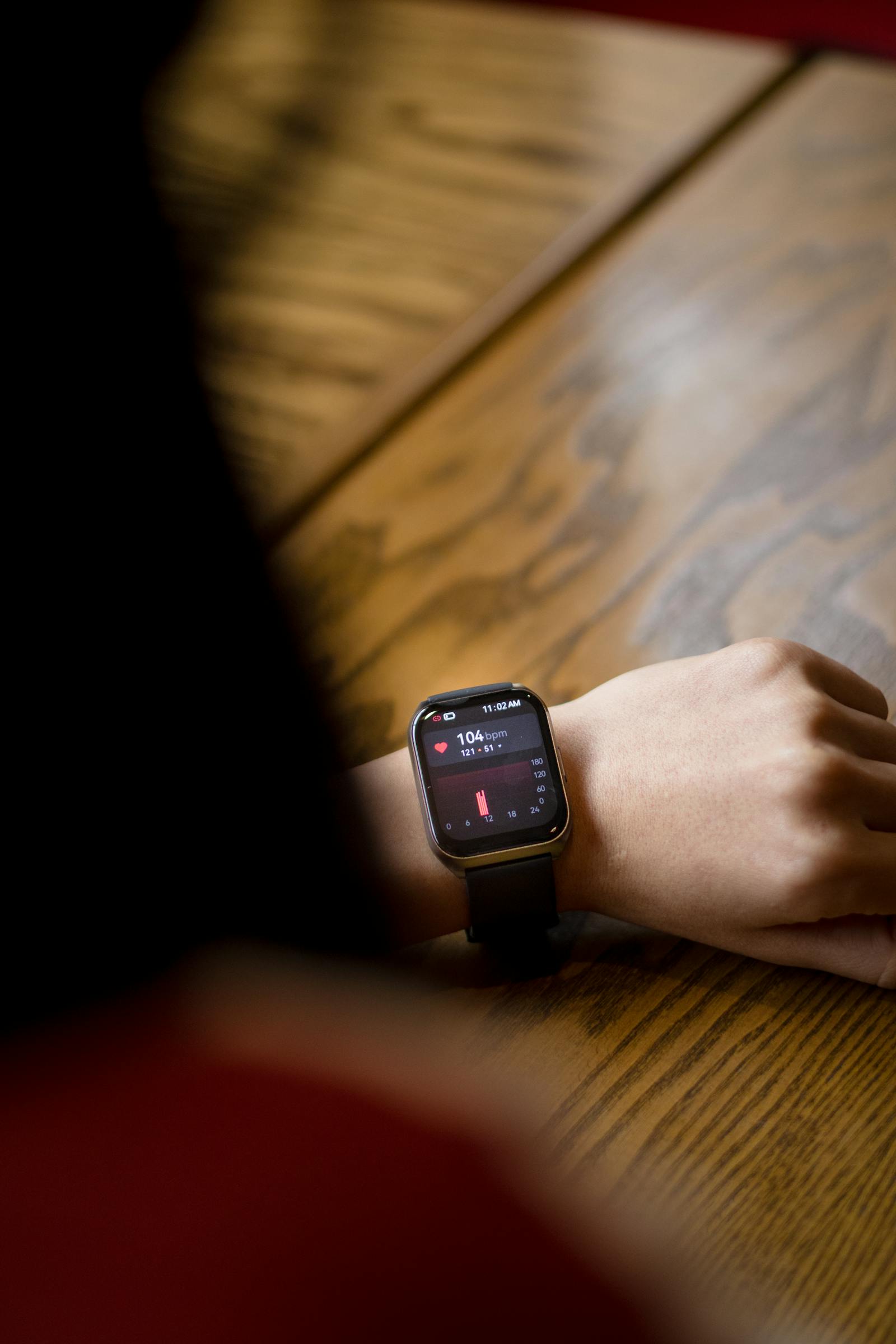
Chest-strap ECG (Polar H10, Garmin HRM-Pro, ECG-grade research devices) is the gold standard for consumer HRV measurement. Wrist-based photoplethysmography (PPG, used in Apple Watch, Whoop, Fitbit, Garmin watches) is convenient but has higher noise, especially during movement. Most consumer wearables report HRV during sleep or in dedicated quiet morning windows specifically because PPG signal quality is much better at rest than during the day.
For trend interpretation (week-over-week change in personal baseline), wrist PPG is acceptable in most healthy adults. For absolute values or for comparison across individuals, wrist PPG is less reliable. The Whoop, Oura, and Garmin platforms each use different algorithms and report HRV in different scaled units; their absolute values are not interchangeable.
Where the marketing overpromises
- A single-day 'recovery score' or 'readiness score' driven primarily by HRV is precise-looking but rests on noisy underlying measurement and individual variability that exceeds the daily change the score is trying to detect. Treat as one signal among several, not as a precise daily prescription.
- Cross-individual comparisons of absolute HRV are largely meaningless without context. RMSSD of 50 ms means very different things for a 25-year-old endurance athlete versus a 60-year-old sedentary adult.
- Stress claims (HRV is low, you are stressed) confuse one input (autonomic balance) with a complex psychological and physiological state. HRV correlates with acute stress but is far from a definitive readout.
- Long-term trend claims (your HRV is rising, you are getting fitter) are reasonable but slow; meaningful within-individual changes typically take 4 to 8 weeks of consistent training to show clearly.
What the evidence does not yet resolve
- Whether HRV-guided training is superior to predetermined periodization in non-endurance populations (strength athletes, team-sport athletes, recreational adults).
- Whether interventions specifically targeted at raising HRV (breathwork, cold exposure, vagal-nerve approaches) translate into reduced cardiovascular events in healthy adults. The prognostic data are correlational; intervention trials are sparse.
- Whether wearable HRV converges with chest-strap ECG closely enough to be the practical default for serious training prescription.
- Whether morning HRV, sleep HRV, and 24-hour HRV provide independently useful information or whether they are largely redundant.
- How HRV interacts with pharmacologic interventions (beta-blockers reduce sympathetic tone and shift HRV; GLP-1s have less-characterized autonomic effects).
Editorial summary
HRV is a real and useful signal with a strong prognostic literature and a defensible training-application literature in well-trained endurance athletes. Consumer wearables have made it broadly available, and the trend signal in personal data is reasonable. The marketing language is more confident than the underlying precision supports. Use HRV as one component of a multi-signal recovery picture, not as a daily verdict.
References
- [1] Plews DJ, Laursen PB, Stanley J, Kilding AE, Buchheit M. Training adaptation and heart rate variability in elite endurance athletes: opening the door to effective monitoring. Sports Med 2013 (PMID 23852425) (PubMed)
- [2] Tsuji H, Larson MG, Venditti FJ Jr, et al. Impact of reduced heart rate variability on risk for cardiac events. The Framingham Heart Study. Circulation 1996 (PMID 8941112) (PubMed)
- [3] Stanley J, Peake JM, Buchheit M. Cardiac parasympathetic reactivation following exercise: implications for training prescription. Sports Med 2013 (PMID 23912805) (PubMed)
- [4] Buchheit M. Monitoring training status with HR measures: do all roads lead to Rome? Front Physiol 2014 (PMID 24578692) (PubMed)
- [5] Billman GE. The LF/HF ratio does not accurately measure cardiac sympatho-vagal balance. Front Physiol 2013 (PMID 23431279) (PubMed)
- [6] Task Force of The European Society of Cardiology and The North American Society of Pacing and Electrophysiology. Heart rate variability: standards of measurement, physiological interpretation, and clinical use. Circulation 1996 (PMID 8598068) (PubMed)
- [7] Hillebrand S, Gast KB, de Mutsert R, et al. Heart rate variability in the prediction of mortality: A systematic review and meta-analysis of healthy and patient populations. Neurosci Biobehav Rev 2022 (PMID 36243195) (PubMed)