For research and educational purposes only. Not medical advice.
What standard blood panels actually tell you, and what they miss
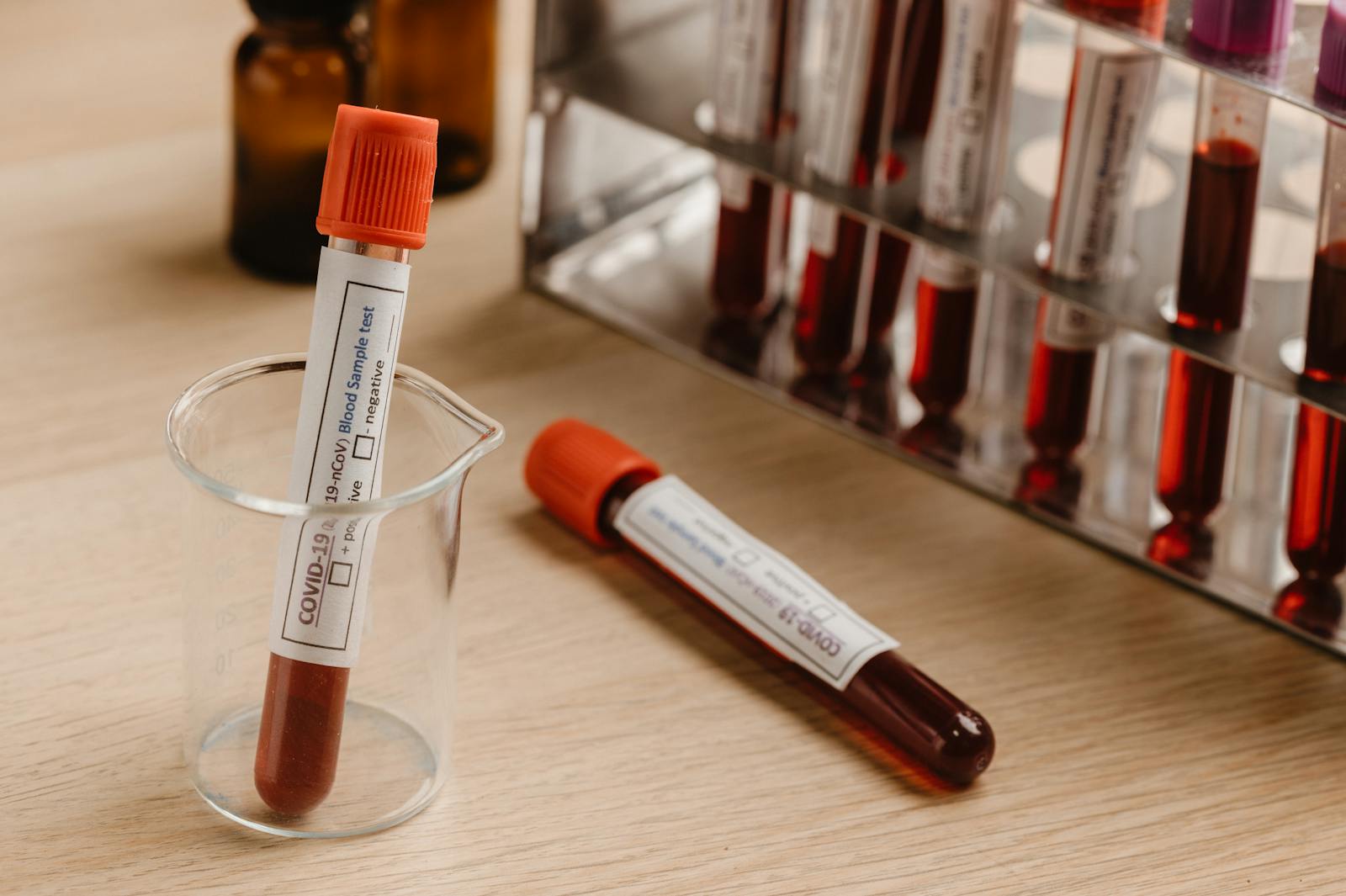
Standard blood panels (CBC, basic or comprehensive metabolic panel, lipid panel) are designed to detect acute or organ-level problems that chang…
For research and educational purposes only. Not medical advice.
Category: Research Gaps. 10 min read. By pepSmart Editorial. .
Key takeaways
- Standard panels (CBC, BMP/CMP, lipid panel) were designed for acute and organ-level pathology screening. They reliably catch anemia, electrolyte and kidney derangements, liver injury, severe hyperglycemia, and severe dyslipidemia.
- Reference ranges are 95 percent statistical intervals from a defined population. By construction, 2.5 percent of healthy people sit below the lower bound and 2.5 percent sit above the upper. "In range" is not the same as "optimal."
- Subclinical hypothyroidism (TSH 4 to 10 mIU per L with normal free T4) is common and is missed by a panel that does not test thyroid at all; even when TSH is included, the upper limit of reference is debated .
- Iron stores low enough to cause fatigue (ferritin under roughly 30 to 50 ng per mL by current criteria) precede frank iron-deficiency anemia by years, so hemoglobin alone can read normal while ferritin is symptomatic .
- Vitamin D and B12 in the insufficient-but-not-deficient range (vitamin D 25-OH 20 to 30 ng per mL; B12 200 to 300 pg per mL with elevated methylmalonic acid) are common symptom-relevant findings that a basic panel does not capture .
- Insulin resistance can develop years before fasting glucose crosses a diagnostic threshold. Fasting insulin and HbA1c add information that a fasting glucose alone does not.
- Symptomatic men with total testosterone in the low-normal band (around 250 to 350 ng per dL) may still meet hypogonadism criteria; the Endocrine Society 2018 guideline requires two confirmatory morning measurements before diagnosis .
- The honest takeaway is not that standard panels are useless. They are a high-value first screen for the problems they were designed for. They are an incomplete answer to the chronic-symptom question, and a competent workup adds targeted second-tier tests when symptoms persist.
What standard panels were actually designed to screen for
The standard outpatient blood panel in 2026 usually means three tests run together: a complete blood count (CBC), a basic or comprehensive metabolic panel (BMP or CMP), and a fasting lipid panel. Each of these has a defined clinical purpose and was validated against that purpose.
The CBC reports red blood cell count, hemoglobin, hematocrit, mean corpuscular volume (MCV), white blood cell count with a differential, and platelet count. It was built to screen for anemia, infection, hematologic malignancies, and bleeding-disorder states. It is sensitive to large red-cell or platelet derangements that change clinical action and is the workhorse test for anemia case-finding.
The BMP and CMP report serum electrolytes (sodium, potassium, chloride, bicarbonate), kidney function markers (BUN, creatinine, calculated eGFR), glucose, and (in the CMP) liver enzymes (ALT, AST, alkaline phosphatase, total bilirubin), total protein, and albumin. These panels were built to detect acid-base and electrolyte derangements, kidney injury, severe hyperglycemia, hepatocellular and cholestatic liver injury, and malnutrition states.
The fasting lipid panel reports total cholesterol, LDL-C (calculated or directly measured), HDL-C, and triglycerides. It was built to risk-stratify for atherosclerotic cardiovascular disease.
Reference ranges are statistical bands, not health verdicts
A laboratory reference range is conventionally the central 95 percent of measurements from a reference population, typically defined to exclude obvious disease at the time of sampling. The lower bound is the 2.5th percentile and the upper bound is the 97.5th percentile. By construction, 2.5 percent of healthy people sit below the lower bound and 2.5 percent sit above the upper bound at any given measurement. A value just inside the lower bound is not biologically different from a value just below it.
Two practical implications follow. First, "in range" is not the same as "optimal" for that individual. The shape of the distribution within range is rarely flat, and clinically meaningful sub-populations exist within the broad reference band. Second, ranges are population-dependent. Ferritin, hemoglobin, and creatinine reference ranges differ by sex, age, and (in some labs) race. The reference range printed on a lab report depends on which reference population the lab adopted.
This is the core empirical reason the Reddit sign resonates. A test that flags only the bottom 2.5 percent of a reference distribution is unavoidably underpowered for the question "why do I feel off when my labs look normal." A normal lipid panel does not say a person is at no cardiovascular risk; it says they are not at the extreme that triggers immediate pharmacologic action by current guidelines.
Five recurring gaps where standard panels miss symptom-relevant pathology
Below are the five gaps most often surfaced in primary-care follow-up when a patient with non-specific symptoms is told "your labs look normal." Each is a domain where the standard first-tier panel is either silent or underpowered, and where a defined second-tier workup is well established.
Gap 1: subclinical hypothyroidism
Thyroid function is not part of the standard outpatient panel. When TSH is added, the conventional reference range upper limit is around 4 mIU per L. Subclinical hypothyroidism is defined biochemically by TSH above the upper reference limit with normal free T4. Biondi and Cappola 2022 Lancet Diabetes & Endocrinology reviewed prevalence (4 to 20 percent depending on population and cutoff), symptom overlap, and treatment-trial findings .
Two practical points. The upper reference limit is debated. Some endocrinology bodies have argued for a tighter upper bound (around 2.5 to 3 mIU per L) based on TSH distributions in TPO-antibody-negative reference cohorts, but the conventional 4 mIU per L cutoff remains the dominant clinical reference . And not every patient with TSH in the 4 to 10 mIU per L band is symptomatic, and not every symptomatic patient improves with levothyroxine. The treatment trial record is mixed in older adults.
A workup that stops at "TSH normal" misses subclinical hypothyroidism by definition. A workup that adds free T4 and TPO antibodies catches autoimmune thyroiditis as a probable cause when present.
Gap 2: iron stores low enough to cause fatigue without frank anemia
The CBC detects anemia by hemoglobin. Iron deficiency goes through a defined sequence: storage iron (ferritin) falls first, then transferrin saturation falls, then red-cell production drops, and only then does hemoglobin fall below the anemia threshold. A person can be iron deficient and fatigued for months or years while hemoglobin reads normal.
Camaschella 2015 NEJM is the canonical clinical-practice review and walks the diagnostic sequence . Practical cutoffs vary by guideline. The British Society of Gastroenterology and WHO have used ferritin under 30 ng per mL as a strong indicator of depleted stores; some clinicians treat fatigue investigation cutoffs at ferritin under 50 ng per mL because symptoms can emerge in the low-but-not-deficient band, particularly in menstruating women.
A standard panel that does not include ferritin will miss this entirely. A second-tier check adds ferritin and (when ferritin is low) iron saturation and total iron-binding capacity.
Gap 3: vitamin D and vitamin B12 insufficiency
Vitamin D is not on the standard panel. The Endocrine Society 2011 clinical practice guideline (Holick 2011 JCEM) defined vitamin D deficiency as 25-hydroxyvitamin D under 20 ng per mL and insufficiency as 21 to 29 ng per mL, with sufficiency at 30 ng per mL or above . The IOM 2011 report adopted a tighter framing (deficiency under 12 ng per mL, adequacy at 20 ng per mL or above for population bone-health goals). Either way, the standard panel is silent on this question.
Vitamin B12 is also not on a standard panel. The Stabler 2013 NEJM clinical-practice review walks the diagnostic approach: serum B12 under 200 pg per mL is consistent with deficiency, but values between 200 and 300 pg per mL are a gray zone where methylmalonic acid (MMA) and homocysteine help confirm whether tissue-level B12 is actually deficient . Symptoms include fatigue, paresthesias, cognitive complaints, and (in advanced cases) macrocytic anemia or neurologic deficits.
A first-tier panel that omits both of these tests cannot detect either condition. A second-tier panel that adds 25-OH vitamin D, B12, and (when B12 is borderline) MMA captures the population that is most likely to be undertreated.
Gap 4: insulin resistance before glucose breaks
The standard panel reports fasting glucose. The progression from metabolically healthy to type 2 diabetes runs through years of insulin resistance during which fasting glucose stays compensated by rising fasting insulin. Fasting glucose alone is therefore a late marker. HbA1c reflects average glucose over the prior approximately 90 days and rises earlier than a single fasting reading, but still lags the underlying insulin-resistance physiology.
Adding fasting insulin lets the clinician compute HOMA-IR (homeostatic model assessment of insulin resistance), a derived index of insulin sensitivity. Cutoffs are not standardized but values of HOMA-IR above approximately 2.0 are commonly cited as inconsistent with healthy insulin sensitivity. The relevance for a person with non-specific symptoms (fatigue, post-meal sleepiness, body-composition change) is that the metabolic picture can be drifting for years before standard glucose criteria trigger a diagnosis of pre-diabetes or diabetes.
A symptom-oriented workup adds HbA1c and fasting insulin to the fasting glucose value, and (in selected cases) considers a continuous glucose monitor to characterize postprandial responses. See the pepSmart article on continuous glucose monitors in non-diabetic users for the evidence base on CGM-driven dietary changes.
Gap 5: sex hormones in the low-normal band
Sex hormones are not on the standard panel. The Endocrine Society 2018 clinical practice guideline for testosterone therapy in men with hypogonadism (Bhasin 2018 JCEM) defines hypogonadism by the combination of symptoms or signs plus two morning total testosterone measurements below the local laboratory reference range . A single morning measurement is not sufficient; testosterone has diurnal variation and substantial day-to-day variability.
The practical gap is that a man with symptomatic hypogonadism in the low-normal band (total testosterone roughly 250 to 350 ng per dL by US reference ranges) can have a standard outpatient panel that is entirely unremarkable. Free or bioavailable testosterone, sex hormone binding globulin (SHBG), and LH and FSH add interpretive context that distinguishes primary hypogonadism (testicular) from secondary hypogonadism (hypothalamic-pituitary).
Female sex hormone evaluation in the perimenopausal age band is a different workup (cycle-day-dependent FSH and estradiol, plus AMH for ovarian reserve when relevant) and is similarly absent from a standard panel.
What to add to the workup, and when
When standard first-tier labs are unremarkable but symptoms persist, a defined second-tier workup is the clinically standard next step. The specific composition depends on symptom pattern, age, and sex, but a reasonable starting set covers the five gaps above.
- Thyroid: TSH, free T4, TPO antibodies. Free T3 in selected cases.
- Iron: ferritin first. If ferritin is low, add iron saturation and total iron-binding capacity.
- Vitamin D: 25-hydroxyvitamin D. Replacement decisions follow Endocrine Society or IOM frameworks depending on context .
- Vitamin B12: serum B12; add methylmalonic acid (MMA) and homocysteine if B12 is between 200 and 300 pg per mL or if neurologic symptoms suggest tissue-level deficiency .
- Metabolic: HbA1c and fasting insulin in addition to fasting glucose. Consider a fasting lipid panel with non-HDL-C or apoB if cardiovascular-risk context is relevant.
- Inflammation: high-sensitivity C-reactive protein (hs-CRP) as a non-specific systemic-inflammation marker.
- Hormones (when symptom pattern suggests): morning total and free testosterone, SHBG, LH, FSH for men; cycle-day-appropriate FSH, estradiol, and AMH for women in the perimenopausal context.
This is not a comprehensive functional-medicine panel and is not a stand-in for clinician judgment. It is the conventional next step when the first-tier panel does not explain the clinical picture.
Editorial summary
The Reddit-style claim that standard blood panels are designed to keep you out of the ER, not to tell you why you feel like garbage, captures something real about how the panels were built. They were optimized for acute and organ-level pathology screening at routine cost, and they do that well. They were not built to explain non-specific chronic symptoms in a person inside reference range, and they will not, on their own, do that.
The correct response is not to discard the standard panel. It is a useful first screen. The correct response is to expect a clinician to add targeted second-tier tests when the first tier is unremarkable and symptoms persist. The five gaps above are where the second tier most consistently adds clinical value.
References
- [1] Biondi B, Cappola AR. Subclinical hypothyroidism in older individuals. Lancet Diabetes Endocrinol 2022 (PMID 34953533) (PubMed)
- [2] Garber JR, Cobin RH, Gharib H, et al. Clinical practice guidelines for hypothyroidism in adults: cosponsored by the AACE and the ATA. Endocr Pract 2012 (PMID 23246686) (PubMed)
- [3] Camaschella C. Iron-Deficiency Anemia. N Engl J Med 2015 (PMID 26222573) (PubMed)
- [4] Holick MF, Binkley NC, Bischoff-Ferrari HA, et al. Evaluation, treatment, and prevention of vitamin D deficiency: an Endocrine Society clinical practice guideline. J Clin Endocrinol Metab 2011 (PMID 21646368) (PubMed)
- [5] Stabler SP. Clinical practice. Vitamin B12 deficiency. N Engl J Med 2013 (PMID 23301732) (PubMed)
- [6] Bhasin S, Brito JP, Cunningham GR, et al. Testosterone Therapy in Men With Hypogonadism: An Endocrine Society Clinical Practice Guideline. J Clin Endocrinol Metab 2018 (PMID 29562364) (PubMed)