Do you stop your GLP-1 before surgery or a colonoscopy?
Should you stop your GLP-1 before surgery or a colonoscopy? How the guidance moved from a blanket hold to an individualized, team-set plan.
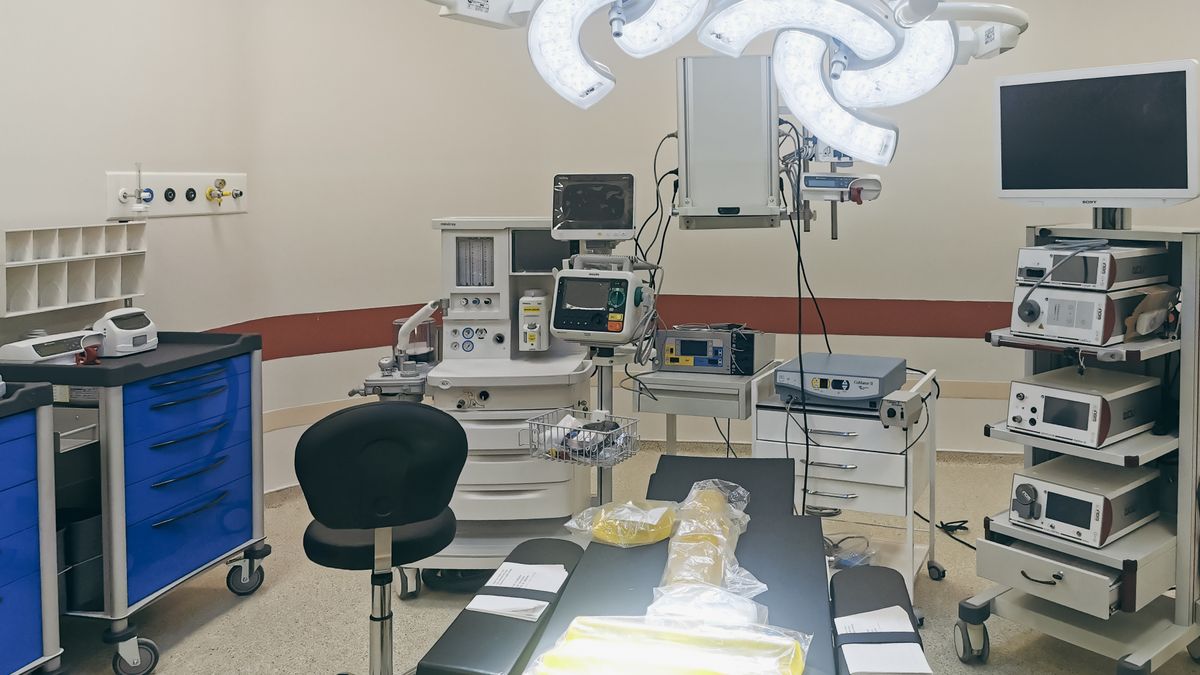
For research and educational purposes only. Not medical advice.
Category: GLP-1. 8 min read. By pepSmart Editorial. .
Key takeaways
- The concern is a full stomach under sedation. GLP-1 drugs slow stomach emptying, so food can still be there when you are anesthetized, which raises the risk of regurgitating and breathing it into the lungs (aspiration) .
- The slowing is measurable. In a meta-analysis, the solid-food stomach half-emptying time was about 138 minutes on a GLP-1 versus 95 minutes on placebo, a difference of roughly 36 minutes, and in one scintigraphy study about 37 percent of the solid test meal was still retained at four hours .
- The advice changed from 2023 to 2024. In 2023 anesthesiologists advised holding GLP-1s before procedures (daily-dosed on the day of, weekly-dosed about a week before); in 2024 a multi-society update moved to an individualized, risk-stratified plan instead of an automatic stop .
- Stopping is not automatically the safer choice. The 2024 guidance warns that blanket discontinuation has its own risks (rebound high blood sugar, and unfair assumptions about people with obesity) and centers shared decision-making, a 24-hour clear-liquid diet, and a gastric ultrasound when there is concern .
- Never decide this alone. The single most useful thing you can do is tell your prescriber, your proceduralist, and your anesthesia team that you take a GLP-1, and let them set the plan together .
Skip to:
- Why a slowed stomach matters under anesthesia
- How big the delay actually is
- What changed: 2023 hold versus 2024 individualized plan
- What your care team may ask you to do
- The one rule: tell every member of your team
- The bottom line
Why a slowed stomach matters under anesthesia
The reason anyone fasts before surgery is simple: general anesthesia and deep sedation relax the reflexes that normally keep stomach contents out of your airway. If the stomach is empty, there is nothing to come back up. If it is not, food or fluid can regurgitate and be inhaled into the lungs, which is called aspiration, and it is one of the events anesthesia teams work hardest to prevent.
GLP-1 drugs complicate the usual fasting math because they slow the stomach down on purpose. That delayed emptying is part of how they curb appetite and blunt blood-sugar spikes, but it also means the standard overnight fast may not leave the stomach as empty as the anesthesia team expects . The worry is not the drug itself during the procedure; it is the food that the drug left behind.
How big the delay actually is
The delay is real and has been measured. A systematic review and meta-analysis pooling the gastric-emptying studies found that the time for half the solid food to leave the stomach was about 138 minutes on a GLP-1 versus about 95 minutes on placebo, a difference of roughly 36 minutes, and one scintigraphy study within it found about 37 percent of the solid test meal still retained at the four-hour mark . Notably, the same analysis found little difference for liquids, so the delay is mainly a solid-food effect .
Real-world endoscopy data point the same way. In observational reports summarized by a 2025 review, retained stomach contents were seen in roughly 24 percent of semaglutide users versus about 5 percent of non-users on the day of the procedure . That gap is the practical reason the question gets asked at all: often enough, there is still something in the stomach when there should not be.
What changed: 2023 hold versus 2024 individualized plan
This is the part that confuses people, because the advice genuinely evolved in the span of about a year. It is not that the experts disagree; it is that the first response was cautious and broad, and the second was more precise.
In 2023, anesthesiology guidance took the simple, protective route: as summarized in a later review, it advised withholding daily-dosed GLP-1s on the morning of the procedure and suspending weekly-dosed agents for a full seven days before elective interventions, regardless of the reason for taking them . The gastroenterology side issued its own early, cautious update for endoscopy around the same time .
In 2024, a multi-society update (spanning anesthesiology, gastroenterology, and bariatric and endoscopic surgery) moved away from the automatic stop toward an individualized, risk-stratified plan. It centers shared decision-making across your care teams, suggests a clear-liquid diet for at least 24 hours before the procedure, and recommends a point-of-care gastric ultrasound when there is concern about retained contents on the day . It also makes a point that the blanket-hold approach missed: stopping a GLP-1 is not free, because it can swing blood sugar the wrong way, and a one-size-fits-all stop can reflect bias against people with obesity .
The direction has kept moving. In 2025 a perioperative-medicine society consensus went a step further, recommending that most people without significant gastrointestinal symptoms continue their GLP-1 and instead use a prolonged clear-liquid fast before the procedure, on the reasoning that a brief hold does not reliably empty a slowed stomach anyway . The societies still do not fully agree, which is the real point: the trend is away from a blanket stop, and the right answer for you is the one your care teams set together, not a rule you apply on your own.
The 2023 approach was a broad protective hold; the 2024 multi-society update replaced it with an individualized plan. Your team decides which applies to you.
| 2023 (cautious hold) | 2024 (individualized) | |
|---|---|---|
| Overall approach | Blanket hold for everyone | Risk-stratified, shared decision |
| Daily-dosed GLP-1 | Hold on the morning of the procedure | Plan set with your team; mitigation over automatic stop |
| Weekly-dosed GLP-1 | Hold for about 7 days before | Plan set with your team; mitigation over automatic stop |
| Diet before the procedure | Standard fast | Clear-liquid diet for at least 24 hours |
| If retained stomach contents are a concern | Aspiration precautions | Point-of-care gastric ultrasound to assess risk |
2023 schedule as summarized in Crespo et al. 2025 review ; 2024 plan from the multi-society perioperative guidance .
What your care team may ask you to do
Because the current approach is individualized, there is no single answer that fits every person and every procedure. What you can expect is that the plan will be built from a few common pieces, chosen for your situation:
- A clear-liquid diet for at least 24 hours before, which gives the stomach a head start on emptying even if the drug is slowing it .
- A decision about your dose timing, especially for weekly agents, where the day of your last shot relative to the procedure matters. This is a team call, not a guess .
- A possible gastric ultrasound on the day, a quick bedside look to check whether the stomach is empty enough to proceed safely .
- Aspiration precautions during anesthesia if there is any doubt, which the anesthesia team manages directly.
The throughline is that the modern plan tries to keep you safe without reflexively yanking a medication that may be doing real metabolic good. That balance only works if the people making the call actually know you are on the drug.
The one rule: tell every member of your team
This is the part you control. The diet prep, the ultrasound, the dose timing, all of it depends on your care team knowing the drug is in the picture. The most dangerous version of this is the one where nobody is told.
The bottom line
GLP-1 drugs delay stomach emptying enough to matter under anesthesia: solid food took about 36 minutes longer to half-empty in the trials, and retained contents show up far more often in GLP-1 users . The guidance has moved from a 2023 blanket hold to a 2024 individualized plan built on a 24-hour clear-liquid diet, careful dose timing, and a gastric ultrasound when needed, precisely because stopping the drug is not automatically the safer move .
The single rule that survives every version of the guidance is this: do not decide alone. Tell your prescriber, your proceduralist, and your anesthesia team that you are on a GLP-1, and let them build the plan. That one conversation does more for your safety than any rule of thumb.
For research and educational purposes only. Not medical advice.
pepSmart has not commissioned independent clinical review of this article.
More on how we write and source these pieces: Editorial process and contributor disclosure and Sourcing posture.
Spot an error? Email corrections via /about.
Sources: 5 entries, all primary canon (a peer-reviewed gastric-emptying meta-analysis, the 2024 multi-society perioperative guidance, the 2025 SPAQI perioperative consensus, a 2025 peer-reviewed endoscopy review, and the AGA rapid clinical practice update), last reviewed 2026-07-14.
Related tools
- Tirzepatide dose calculator - Run tirzepatide-focused vial draw math.
- GLP-1 conversion calculator - Convert a GLP-1 mg dose to U-100 units and ml.
- GLP-1 ramp planner - Preview a linear educational dose-step table.
- Peptide half-life calculator - Estimate single-dose decay from cited half-life constants.
- PK simulator overview - Public overview of the Pro pharmacokinetic simulator.
- Semaglutide dose calculator - Run semaglutide-focused vial draw math.
References
- [1] Hiramoto B, McCarty TR, Lodhia NA, et al. Quantified Metrics of Gastric Emptying Delay by Glucagon-Like Peptide-1 Agonists: A Systematic Review and Meta-Analysis With Insights for Periprocedural Management. American Journal of Gastroenterology 2024 (PMID 38634551): solid-food gastric half-emptying time 138.4 min on GLP-1 RA vs 95.0 min placebo (pooled mean difference 36.0 min); about 37% mild-to-moderate solid retention at 4 hours; no significant difference for liquids (PubMed)
- [2] Kindel TL, Wang AY, Wadhwa A, et al. Multisociety Clinical Practice Guidance for the Safe Use of Glucagon-like Peptide-1 Receptor Agonists in the Perioperative Period (AGA, ASMBS, ASA, ISPCOP, SAGES), 2024: perioperative GLP-1 RA use should rest on shared decision-making; a preoperative liquid diet for at least 24 hours can be used; point-of-care gastric ultrasound can assess aspiration risk when retained contents are a concern; blanket discontinuation carries hyperglycemia risk and potential obesity bias (PubMed Central)
- [3] Crespo J, Rodriguez-Duque JC, Iruzubieta P, et al. GLP-1 Receptor Agonists and Gastrointestinal Endoscopy: A Narrative Review of Risks, Management Strategies, and the Need for Clinical Consensus. Journal of Clinical Medicine 2025 (PMID 40807216): summarizes the 2023 ASA advice to withhold daily GLP-1 RA formulations on the morning of the procedure and suspend weekly agents for seven days before elective interventions; reports retained gastric contents in roughly 24% of semaglutide users vs 5% of non-users and a 30 to 40% prolongation of solid gastric emptying (PubMed)
- [4] Hashash JG, Thompson CC, Wang AY. AGA Rapid Clinical Practice Update on the Management of Patients Taking GLP-1 Receptor Agonists Prior to Endoscopy: Communication. Clinical Gastroenterology and Hepatology 2024 (PMID 37944573): the gastroenterology society's early, cautious rapid update on managing GLP-1 RAs before endoscopy (PubMed)
- [5] Society for Perioperative Assessment and Quality Improvement (SPAQI) consensus statement on the perioperative management of GLP-1 receptor agonists, 2025 (PMC12597468): recommends continuing GLP-1 RAs in patients without significant GI symptoms and substituting a prolonged clear-liquid fast for routine discontinuation, noting that brief holds do not adequately restore gastric motility (PubMed Central)
For research and educational purposes only. Not medical advice.