Why China makes your peptides, and how to vet quality
Most peptides are synthesized in China and India. How to vet quality, why purity is not sterility, and what US and Canadian customs actually do.
For research and educational purposes only. Not medical advice.
Category: Research Gaps. 10 min read. By pepSmart Editorial. .
Key takeaways
- As of 2025, the FDA counts only about 11 percent of the manufacturers making active ingredients for FDA-approved drugs as US-based, and it calls the resulting overreliance on foreign manufacturing a national security risk . In 2019 the agency put 72 percent of the API facilities supplying the US market overseas, with China holding 13 percent (230 sites) and its API-facility count more than doubling from 2010 to 2019 .
- Those are counts of facilities, not volumes. The FDA states plainly that it cannot measure how much API China actually produces or how much reaches the US market, so any 'China makes X percent of the world's peptides' figure is an estimate, not a measurement .
- A high HPLC purity percent is not a sterility result. Purity says how much of what the method detected is the target molecule; it says nothing about bacterial endotoxin, which for injectable drugs is capped at 5 endotoxin units per kilogram of body weight (0.2 for spinal injection) under the standard test .
- Endotoxin is the lipid A of gram-negative bacterial cell walls, a heat-stable pyrogen that in the bloodstream can drive fever and, in bad cases, septic shock . Research-grade powder is not made to be injected, and no purity number rules this out.
- Importing an unapproved drug for personal use is, in most circumstances, illegal in the US; the FDA's enforcement-discretion carve-out is narrow (serious condition, no domestic treatment, generally a three-month supply) and research peptides do not fit it . In Canada, CBSA detains suspect health-product shipments and refers them to Health Canada, which can test, seize, or refuse them .
Skip to:
- Spot quality without trusting the marketing
- Why China and India synthesize most of the world's active ingredients
- Research-grade purity is not pharmaceutical-grade sterility
- What US and Canadian customs actually do with peptide shipments
- Bottom line: buy the testing, not the story
Spot quality without trusting the marketing
Here are the red flags that hold up no matter how the product is marketed. Each one is a place where a weak source gets lazy or overstates what a test proves.
- A single purity percent with no identity test. High-performance liquid chromatography measures how pure the powder is; it cannot tell the labeled peptide from a cheaper lookalike, which takes mass spectrometry . One number is half a result.
- A certificate from the seller's own bench. Even licensed drug makers cannot accept a supplier's report on its own; the federal rule makes them run their own identity test and validate the supplier over time . A document the seller generated is self-reported, not independent.
- No endotoxin or sterility test on material you intend to inject. Purity is silent on bacterial endotoxin, which is capped at 5 EU/kg for injectable drugs under the standard test . A clean purity number with no endotoxin result covers the wrong risk.
- Marketing that implies pharmaceutical or GMP quality. Compounded and research-grade products are not FDA-approved, and the FDA does not evaluate them for safety, effectiveness, or quality before sale . 'Pharmaceutical-grade' with no good-manufacturing-practice facility behind it is a word, not a standard.
- A test you cannot tie to the vial in your hand. A lot number on the certificate that does not match your vial, or a report the issuing lab will not confirm, describes someone else's batch.
For how to read those test line by line (what the chromatogram shows, how to catch a doctored or recycled certificate), see how to read a peptide COA. This piece is about the sourcing and quality reality upstream of that certificate: where the powder comes from, and what a purity number does not cover.
Why China and India synthesize most of the world's active ingredients
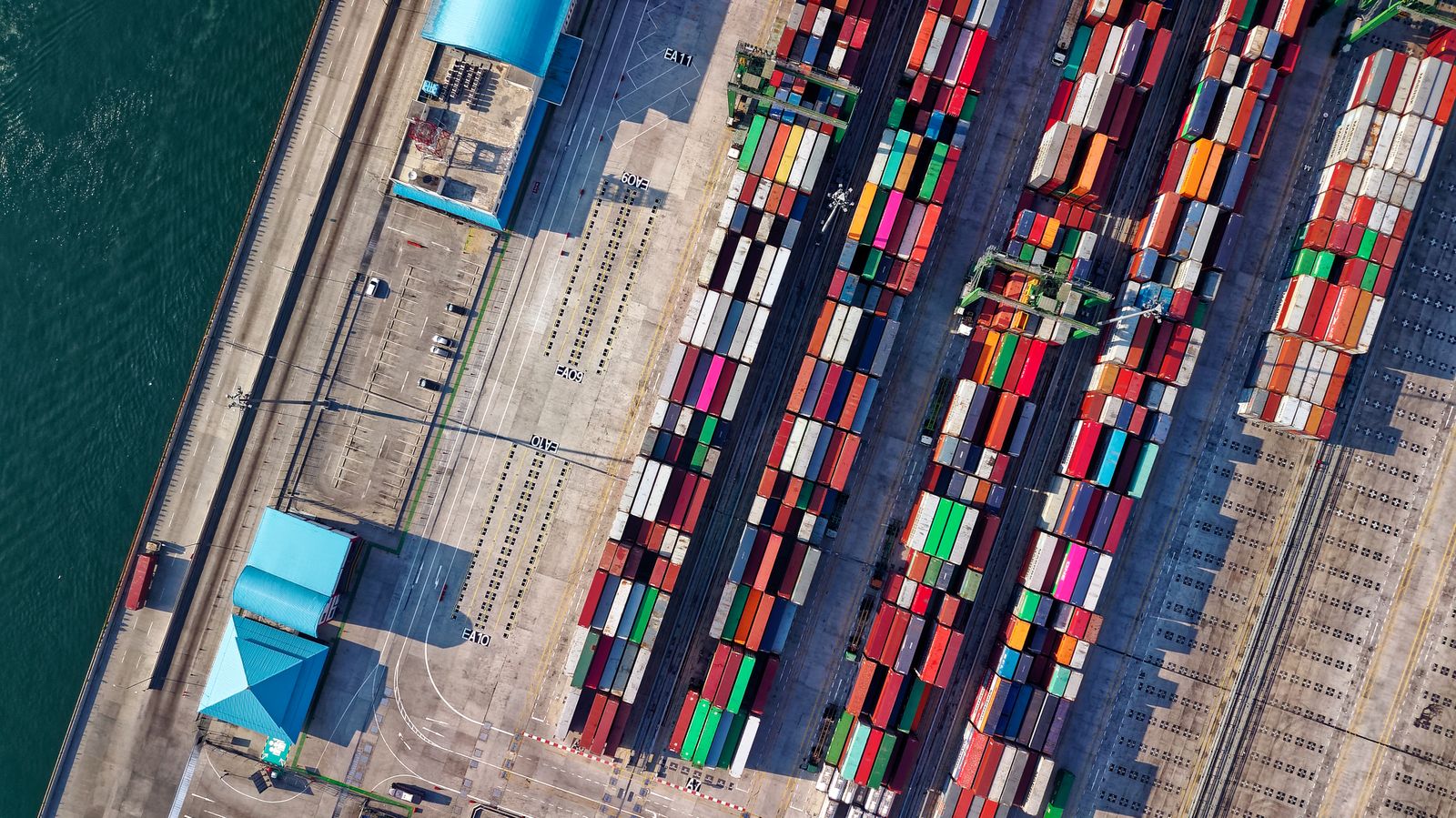
The powder starts life as an active pharmaceutical ingredient, or API: the actual drug substance, before it becomes a tablet, a capsule, or an injection. And most of the world's API is made a long way from the person who ends up using it.
As of 2025, the FDA counts only about 11 percent of the manufacturers making APIs for FDA-approved drugs as US-based, and Commissioner Marty Makary called the overreliance on foreign drug manufacturing a national security risk . Back in 2019 the agency put 28 percent of the facilities making APIs for the US market at home and 72 percent overseas, with China holding 13 percent (230 sites) and its API-facility count more than doubling between 2010 and 2019 .
Read those as facility counts, not production volumes. The FDA says outright that it cannot determine how much API China actually produces, or how much reaches the US market directly or baked into finished drugs made elsewhere . So a 'China makes X percent of the world's peptides' claim is a guess dressed as a statistic. The direction is clear; the precise share is not knowable from the data the agency has.
The reasons for the shift are boring and durable: lower labor, energy, and materials costs, plus lighter environmental rules. The FDA's testimony cites a World Bank wage index where a typical Western API maker sits at 100 and a Chinese firm at 8, and notes API work in India can cut costs for Western companies by 30 to 40 percent .
Research peptides (the BPC-157, TB-500, CJC-1295, and ipamorelin that fill the research-supply market) and the raw material behind compounded GLP-1s ride the same synthesis-and-export rails as the rest of the world's active ingredients. Plenty of Chinese and Indian API is made to a high standard for regulated buyers, so the country of origin is not the problem by itself. The problem sits at the bottom of the chain, where research-supply powder skips the oversight a finished drug gets. The FDA has flagged exactly this: in 2015 it warned compounders that baclofen API from a Chinese manufacturer was not suitable for sterile injectable drugs and might be contaminated with particulates or endotoxin .
Research-grade purity is not pharmaceutical-grade sterility
Two phrases get used as if they mean the same thing, and they measure completely different things. Research-grade purity is a chemistry number. Pharmaceutical-grade sterility is a manufacturing standard. A vial can post a beautiful purity figure and still be something you should not put in your body.
Purity is an HPLC result: the target molecule as a percent of everything the method detected . It is honest about the impurities it can see and silent about the rest, and it is completely silent about whether the vial is sterile or pyrogen-free. Those are separate tests, and a purity certificate does not stand in for them.
Pharmaceutical-grade sterility is a system, not a line on a certificate. An FDA-approved injectable is made under good manufacturing practice, tested for sterility and endotoxin, and released only against a specification. A compounded or research-grade product is not FDA-approved, and the FDA does not check it for safety, effectiveness, or quality before it is sold . The gap between those two worlds is the whole point of the phrase 'pharmaceutical-grade'.
Research-use-only is the seller saying the powder is not for human consumption, which also means it was never held to injection standards. Plenty of research vials are clean anyway. The catch is that the sterility and endotoxin checks become the buyer's job, and a purity percent does not do them. A lab result that reports an endotoxin figure on your actual lot is worth more than a higher purity number with no endotoxin line at all.
What US and Canadian customs actually do with peptide shipments
The piece people underestimate is customs. Research peptides are unapproved drugs, and both the US and Canada treat personal importation of unapproved drugs as restricted by default.
In the US, the FDA states that in most circumstances it is illegal for an individual to import an unapproved drug for personal use . There is an enforcement-discretion carve-out, but it is narrow: it is aimed at a serious condition for which effective treatment is not available domestically, with no commercialization to US residents, no unreasonable risk, a written personal-use affirmation, and generally not more than a three-month supply . A research peptide bought for general wellness does not fit that description, and the FDA lists being on an import alert or appearing intended for commercial distribution as reasons to refuse a shipment outright . Customs and Border Protection is the agency that physically holds the parcel while the FDA makes the call.
Canada runs a parallel system. The Canada Border Services Agency detains suspect health-product shipments under the Customs Act and refers them to Health Canada, whose inspectors can examine, test, seize, or order the goods disposed of . CBSA can seize under the Customs Act; Health Canada makes the admissibility decision.
None of this is a how-to for getting a package through, and this piece will not give you one. The takeaway runs the other way: a seized shipment is money gone and a paper trail, so the legal reality is part of the quality picture, not separate from it. A source that pretends customs is not a factor is a source that has not thought hard about your risk.
Bottom line: buy the testing, not the story
Strip it down. Most peptide raw material is synthesized in China and India for cost reasons, and facility counts are the only hard data, so volume shares are guesses . A purity percent is not a sterility or endotoxin result, and injectable drugs must clear an endotoxin limit that research powder is not tested against by default . Importing unapproved peptides for personal use is restricted in both the US and Canada, whatever a vendor implies .
So the move is not to trust a country of origin or a single number. It is to make the source earn it: independent lot-level testing that covers identity and, for anything injectable, endotoxin, plus honest labeling about what the product is. Buy the testing, not the story.
For research and educational purposes only. Not medical advice.
pepSmart has not commissioned independent clinical review of this article.
More on how these pieces are written and sourced: Editorial process and contributor disclosure and Sourcing posture.
Spot an error? Email corrections via /about.
Sources: 9 entries, all primary sources (US FDA, accessdata.fda.gov CFR, the Canada Border Services Agency, and NCBI / PMC / StatPearls), last reviewed 2026-07-11.
Related tools
- Peptide reconstitution calculator - Convert vial mass and BAC water volume into mcg/ml.
- BAC water calculator - Solve BAC water volume for a target concentration.
- Multi-dose vial calculator - Estimate doses per vial and a projected vial-empty date.
- Reconstituted-vial storage window calculator - Estimate a generic usable-window date and days remaining.
- Peptide half-life calculator - Estimate single-dose decay from cited half-life constants.
Frequently asked questions
- Where are most peptides actually made?
- Most active pharmaceutical ingredients, including research peptides and the raw material behind compounded GLP-1s, are synthesized overseas, with China and India as the dominant low-cost geographies. As of 2025 the FDA counted only about 11 percent of the manufacturers making active ingredients for approved drugs as US-based. The exact share made in any one country is not knowable, because the FDA can measure facility counts but not production volumes.
- Does a high purity percentage mean a peptide is safe to inject?
- No. Purity from HPLC tells you how much of the powder is the target molecule. It does not tell you whether the material is sterile or free of bacterial endotoxin, which for injectable drugs is capped at 5 endotoxin units per kilogram of body weight under the standard test. Those are separate questions that need separate tests.
- Is it legal to import peptides for personal use?
- In most circumstances, no. The FDA treats importing an unapproved drug for personal use as illegal, with only a narrow enforcement-discretion carve-out for a serious condition that has no effective treatment available domestically. In Canada, the Canada Border Services Agency can detain a suspect shipment and refer it to Health Canada, which can test, seize, or refuse it.
References
- [1] FDA press announcement, FDA Announces New FDA PreCheck Program to Boost U.S. Drug Manufacturing (2025): more than half of pharmaceuticals distributed in the U.S. are manufactured overseas; only 11% of the manufacturers producing APIs used in FDA-approved products are U.S. manufacturers; Commissioner Makary on overreliance on foreign drug manufacturing as a national security risk (U.S. FDA)
- [2] FDA congressional testimony, Safeguarding Pharmaceutical Supply Chains in a Global Economy (10/30/2019): as of August 2019, 28% of API manufacturing facilities for the U.S. market were domestic and 72% overseas, China 230 sites (13%); China's API facilities more than doubled 2010-2019; FDA cannot determine actual API production volume; 2015 alert that baclofen API from a Chinese manufacturer was not suitable for sterile injectables and might be contaminated with particulates or endotoxin (U.S. FDA)
- [3] McCarthy D et al. Reference Standards to Support Quality of Synthetic Peptide Therapeutics, Pharmaceutical Research 2023 (PMC10338602): RP-HPLC purity; mass spectrometry for identity confirmation; orthogonal methods (NCBI PMC)
- [4] FDA, Compounding and the FDA: Questions and Answers (compounded drugs are not FDA-approved; FDA does not evaluate them for safety, effectiveness, or quality before they are marketed; compounded products may pose risks approved products do not) (U.S. FDA)
- [5] 21 CFR 211.84(d)(1)-(d)(2), Code of Federal Regulations Title 21, Testing and approval or rejection of components (supplier report of analysis accepted only when the manufacturer runs at least one specific identity test itself and validates supplier reliability over time) (U.S. FDA (accessdata CFR))
- [6] Detection and Quantification of Gram-Negative Bacterial Endotoxin Contamination by Kinetic Turbidity LAL Assay, NCI Nanotechnology Characterization Laboratory Assay Cascade Protocols (NCBI Bookshelf NBK612347): endotoxin limit K is 5 EU/kg for all routes of administration except intrathecal, for which K is 0.2 EU/kg (NCBI Bookshelf)
- [7] Farhana A, Khan YS. Biochemistry, Lipopolysaccharide, StatPearls (NCBI Bookshelf NBK554414): lipid A is the endotoxin and main virulence factor; LPS is a potent, thermostable pyrogen that in circulation causes fever and, in adverse circumstances, septic (endotoxic) shock (NCBI Bookshelf)
- [8] FDA, Personal Importation (Import Program): in most circumstances it is illegal for individuals to import an unapproved drug for personal use; enforcement-discretion factors include a serious condition with no effective domestic treatment, no commercialization to U.S. residents, no unreasonable risk, written personal-use affirmation, and generally not more than a three-month supply; refusal when on an FDA import alert or apparently for commercial distribution (U.S. FDA)
- [9] CBSA Memorandum D19-9-1, The Administration of Health Canada Acts and Regulations Relating to Certain Controlled, Prohibited or Regulated Goods: CBSA detains goods under the Customs Act and refers them to Health Canada for an admissibility recommendation; Health Canada inspectors may examine, test, seize, or order disposition; CBSA may seize under the Customs Act (Canada Border Services Agency)
For research and educational purposes only. Not medical advice.