Beyond Ozempic: how GLP-1s lit the peptide boom
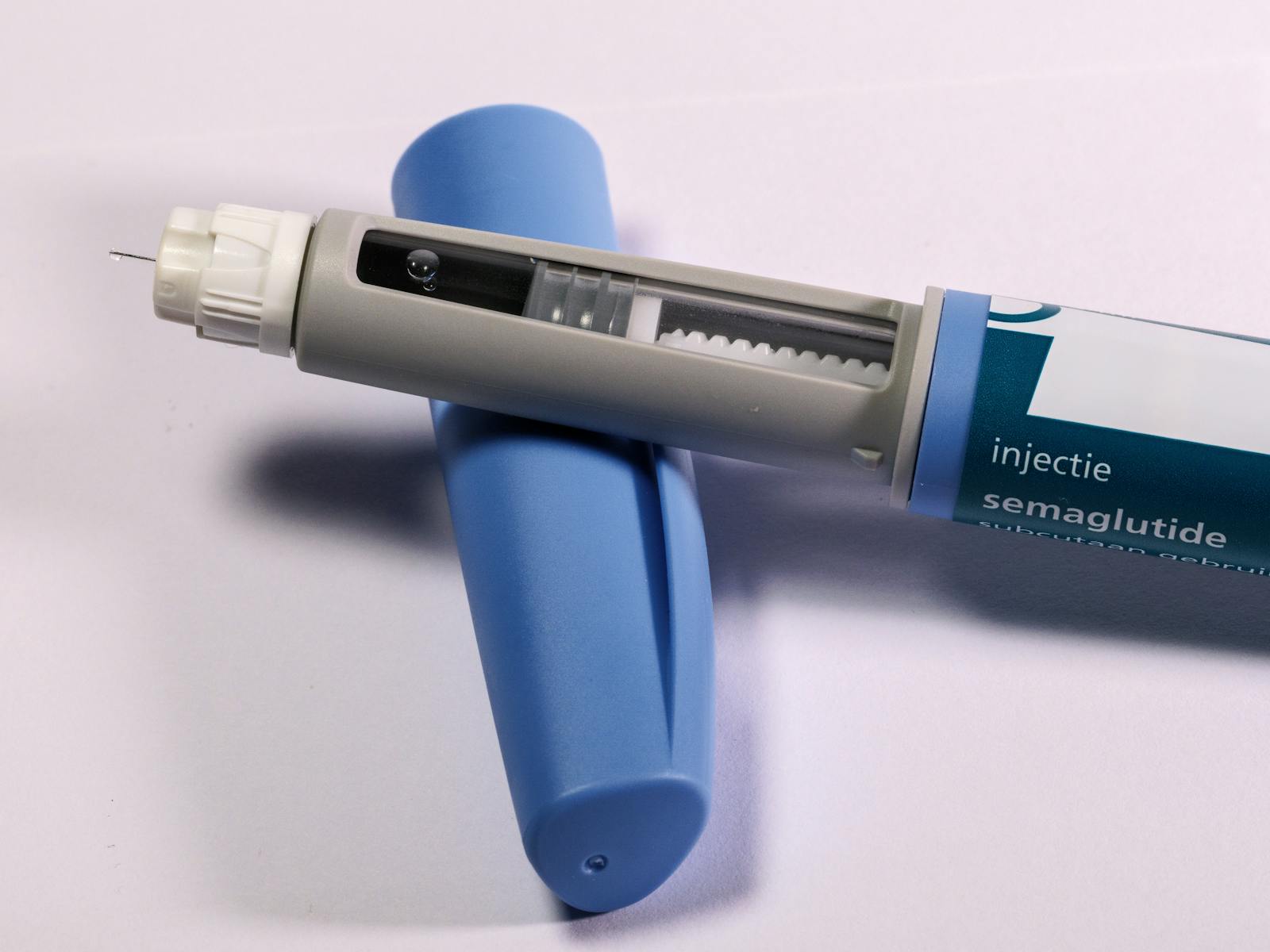
The GLP-1 drugs are not the same thing as the peptides riding their hype. Semaglutide and tirzepatide have large Phase 3 weight-loss trials and FDA approv…
For research and educational purposes only. Not medical advice.
Category: GLP-1. 12 min read. By pepSmart Editorial. .
Key takeaways
- The GLP-1 drugs earned the attention with trial numbers, not vibes. Semaglutide 2.4 mg cut mean body weight about 14.9 percent at 68 weeks (STEP 1), tirzepatide 15 mg about 20.9 percent at 72 weeks (SURMOUNT-1), and in the only head-to-head, tirzepatide beat semaglutide 20.2 percent versus 13.7 percent at 72 weeks (SURMOUNT-5, n=751) .
- Those drugs are GLP-1 receptor agonists, which are peptides, so the win pulled the whole word 'peptide' into the consumer vocabulary and a gray market followed .
- CJC-1295 plus ipamorelin, the most-marketed metabolic stack riding the wave, raises growth hormone and IGF-1 in short human studies but has no controlled human trial showing meaningful fat loss or weight management, and neither has an approved label .
- Most of these peptides are sold as gray-market product. The FDA puts substances like BPC-157 in 503A Category 2 (bulk substances that may present significant safety risks for compounding) and has flagged dosing errors with compounded GLP-1 products specifically .
- The regulatory fight is live, not settled. The FDA scheduled a Pharmacy Compounding Advisory Committee meeting for July 23-24, 2026 to weigh compounded substances, and the semaglutide and tirzepatide shortages that fueled compounding have been resolved, removing the legal cover many compounders relied on .
Skip to:
- What earned the hype vs what is riding it
- How Ozempic made 'peptide' a household word
- Why the win spilled into a peptide gold rush
- CJC-1295 plus ipamorelin: the pitch vs the evidence
- The rest of the metabolic-peptide tail
- The compounding fight underneath all of it
- Bottom line
What earned the hype vs what is riding it
Here is the same question most readers actually arrived with, laid out by what the evidence supports. Every row is the compound, the verdict, the load-bearing number, and the source. The first two rows are the drugs that started the wave. The rest are what is being sold in their wake.
- Semaglutide (Ozempic, Wegovy): approved, large trials. About 14.9 percent mean weight loss at 68 weeks on 2.4 mg in STEP 1 .
- Tirzepatide (Mounjaro, Zepbound): approved, larger signal. About 20.9 percent at 72 weeks on 15 mg in SURMOUNT-1, and 20.2 percent versus semaglutide's 13.7 percent in the head-to-head .
- CJC-1295 plus ipamorelin: gray market, no outcome data. Raises growth hormone and IGF-1 in short human studies, zero controlled human weight-loss trials, no approved label .
- Tesamorelin: the one growth-hormone-axis peptide with an FDA label, narrowly for HIV-associated visceral fat, not general weight loss (covered in tesamorelin and visceral fat).
- AOD-9604: marketed as a fat-loss fragment, did not beat placebo in its obesity trials (covered in the AOD-9604 fragment).
How Ozempic made 'peptide' a household word
Semaglutide and tirzepatide are GLP-1 receptor agonists. Chemically they are peptides: short chains of amino acids engineered to survive in the body longer than the natural hormone they mimic. So when Ozempic, Wegovy, Mounjaro, and Zepbound went from diabetes drugs to a cultural event, the word that traveled with them was 'peptide'. That is the whole linguistic accident behind the boom. A class of injectable peptides worked spectacularly for weight, and 'peptide' stopped being a biochemistry-class term.
The numbers are why anyone paid attention. In STEP 1, the pivotal semaglutide obesity trial, participants on 2.4 mg weekly lost about 14.9 percent of body weight at 68 weeks versus about 2.4 percent on placebo . In SURMOUNT-1, tirzepatide 15 mg produced about 20.9 percent mean weight loss at 72 weeks . Those are surgical-adjacent numbers from a once-weekly injection, which is why the drugs broke out of the diabetes aisle.
Then came the head-to-head. SURMOUNT-5 randomized 751 adults with obesity to tirzepatide or semaglutide for 72 weeks. Tirzepatide cut body weight 20.2 percent versus semaglutide's 13.7 percent, a statistically significant gap . A direct comparison settling which incretin drug wins is the kind of evidence that turns a trend into a category. The deeper read on that specific matchup lives in tirzepatide vs semaglutide head to head.
All four products are FDA-approved with prescribing information on the public DailyMed and FDA pages, manufactured under the chemistry and manufacturing controls that approval requires . That matters for the next part, because it is exactly the footing the peptides riding the wave do not share.
Why the win spilled into a peptide gold rush
Once a peptide drug visibly worked for the thing half the market wants, two questions followed. From consumers: what else can peptides do. From sellers: what else can we sell as a peptide. The first question is reasonable. The second is where the gray market grew.
The framing that peptides 'went mainstream' is a cultural observation, not a clinical finding, and the loudest versions of it come from brands and social media rather than from journals. Read that framing as marketing momentum, not evidence. The honest version is narrower: one specific peptide class, the GLP-1 receptor agonists, generated landmark trial data, and the attention spilled onto everything else wearing the peptide label.
The supply side filled in fast. During the semaglutide and tirzepatide shortages, compounding pharmacies were legally permitted to make versions of drugs in shortage, and a parallel research-chemical market sprang up selling everything from compounded GLP-1s to growth-hormone secretagogues to obscure repair peptides. The FDA has specifically warned about dosing errors with compounded GLP-1 products, where patients drew the wrong volume from multi-dose vials and overdosed . The split between approved product and compounded or research-chemical versions is worked through in compounded GLP-1s vs labeled product.
The tell is that the marketing leans on the word, not on the data. 'Peptide therapy' as a retail pitch borrows the credibility the GLP-1 trials earned and spreads it across compounds that never ran those trials. That is the move to watch for, and it is the reason the next two sections separate the actual evidence from the pitch.
CJC-1295 plus ipamorelin: the pitch vs the evidence
The most-marketed metabolic stack in the GLP-1 slipstream is CJC-1295 paired with ipamorelin. The pitch is that it boosts your own growth hormone for fat loss, muscle, recovery, and anti-aging, framed as a natural alternative to the injectable drugs. The mechanism is real. The weight-loss claim is the part with no trial behind it.
CJC-1295 is a growth-hormone-releasing hormone analog. In a controlled study in healthy adults it produced sustained, dose-dependent increases in growth hormone and IGF-1 levels . Ipamorelin is a selective growth-hormone secretagogue with established human pharmacokinetics that stimulates a growth-hormone pulse without much effect on cortisol or prolactin. Stack them and you get a larger, more pulsatile growth-hormone release than either alone. That is the entire evidentiary basis: they move a hormone level.
The contrast with the GLP-1 drugs is the whole point. Semaglutide and tirzepatide ran multi-thousand-participant trials that measured the outcome people actually care about, percent body weight lost, and reported about 14.9 and 20.9 percent . CJC-1295 plus ipamorelin reports a hormone bump in a small study and asks you to assume the rest. Those are not the same evidence tier, and selling the second on the reputation of the first is the core sleight of hand of the boom.
There is also a population caveat: elevating growth hormone and IGF-1 chronically is not consequence-free, and the long-term safety of sustained secretagogue use in healthy adults has not been studied in the way an approved drug's has. Decisions here belong with a clinician, not a vendor's product page.
The rest of the metabolic-peptide tail
CJC-1295 plus ipamorelin is the headliner, but the same pattern repeats down a long tail of compounds sold as metabolic peptides. The useful sort is by how much human evidence actually exists.
- Tesamorelin is the exception that proves the rule: a growth-hormone-releasing hormone analog with an actual FDA label, but narrowly for HIV-associated lipodystrophy (excess visceral fat), not general weight loss. Its trial data and approved scope are walked through in tesamorelin and visceral fat.
- AOD-9604, a fragment of growth hormone marketed as a fat-burning peptide, is the cautionary case: it advanced into human obesity trials and did not beat placebo for fat loss, which is covered in the AOD-9604 fragment.
- Sermorelin, another growth-hormone-releasing peptide, has a history as an approved diagnostic and pediatric agent but no weight-loss outcome evidence in healthy adults at the doses sold for body composition.
- Repair and recovery peptides like BPC-157 and TB-500 are frequently bundled into 'peptide therapy' menus alongside the metabolic ones; the human evidence there is thinner still, and BPC-157 specifically sits in FDA 503A Category 2 .
The pattern across the tail is consistent. Where a real approved indication exists, it is narrow and specific (tesamorelin for HIV lipodystrophy). Where the marketing is broadest (general fat loss, anti-aging, recomposition), the human outcome data is thinnest. The breadth of the claim and the depth of the evidence tend to run in opposite directions, which is the single most useful heuristic for reading any 'peptide therapy' menu. For a wider survey of what is actually being sold and asked about, see the most in-demand peptides of 2026.
The compounding fight underneath all of it
The legal scaffolding that let the gray market grow is shifting, and that is the regulatory debate the boom is sitting on top of. Two pieces matter.
First, the shortages ended. Compounding pharmacies were allowed to make copies of semaglutide and tirzepatide largely because both were on the FDA drug shortage list, which creates a temporary legal lane. With the shortages resolved, that lane closes for those specific drugs, and the FDA has published guidance on the wind-down for compounded semaglutide . A large share of the compounded-GLP-1 supply many people relied on loses its legal footing as that resolves.
Second, the peptide bulk-substance question is unsettled and being actively debated. The FDA sorts bulk substances proposed for 503A compounding into categories, and it has placed substances like BPC-157 in Category 2: bulk drug substances that raise significant safety concerns for use in compounding . Category 2 is not an approval and not a clean bill of health; it is a flag. The agency scheduled a Pharmacy Compounding Advisory Committee meeting for July 23-24, 2026 to take public comment and advise on compounded substances, which is the formal venue where this gets argued rather than assumed .
None of this is settled law as of mid-2026. The PCAC meeting advises; it does not by itself decide. But the direction of travel is clear: the easy shortage-era access is tightening, and the substances marketed most aggressively are the ones drawing the most regulatory attention.
Bottom line
The GLP-1 drugs are a genuine pharmacological breakthrough that happen to be peptides. The peptide boom is the marketing wave that followed, and it is not evenly grounded. Semaglutide and tirzepatide have the trials, the head-to-head, and the approvals (14.9 percent, 20.9 percent, and 20.2 versus 13.7 percent on the scale) . The compounds being sold in their slipstream mostly do not.
The practical filter is simple. Ask what outcome trial exists for the specific compound being sold, not for the class it shares a label with. CJC-1295 plus ipamorelin raises a hormone in a short study; it does not have a weight-loss trial . And the easy access is closing fast: the shortages that let compounders copy the GLP-1 drugs have resolved, and the FDA's compounding advisory committee is taking the peptide question up in July .
For research and educational purposes only. Not medical advice.
pepSmart has not commissioned independent clinical review of this article. Decisions about GLP-1 therapy or any peptide, especially in combination, with existing conditions, or alongside other medications, belong with a qualified clinician who can review individual history.
For how this article was sourced and reviewed, see Editorial process and contributor disclosure and Sourcing posture.
Spot an error? Email corrections via /about.
Sources: 12 entries, all primary canon (PubMed, FDA, WADA), last reviewed 2026-05-28.
Related tools
- Tirzepatide dose calculator - Run tirzepatide-focused vial draw math.
- GLP-1 conversion calculator - Convert a GLP-1 mg dose to U-100 units and ml.
- GLP-1 ramp planner - Preview a linear educational dose-step table.
- Peptide half-life calculator - Estimate single-dose decay from cited half-life constants.
- PK simulator overview - Public overview of the Pro pharmacokinetic simulator.
- Semaglutide dose calculator - Run semaglutide-focused vial draw math.
References
- [1] Wilding JPH, Batterham RL, Calanna S, et al. Once-Weekly Semaglutide in Adults with Overweight or Obesity (STEP 1). N Engl J Med 2021 (PMID 33567185) (PubMed)
- [2] Jastreboff AM, Aronne LJ, Ahmad NN, et al. Tirzepatide Once Weekly for the Treatment of Obesity (SURMOUNT-1). N Engl J Med 2022 (PMID 35658024) (PubMed)
- [3] Aronne LJ, Horn DB, le Roux CW, et al. Tirzepatide as Compared with Semaglutide for the Treatment of Obesity (SURMOUNT-5). N Engl J Med 2025 (PMID 40353578) (PubMed)
- [4] Teichman SL, Neale A, Lawrence B, et al. Prolonged stimulation of growth hormone and insulin-like growth factor I secretion by CJC-1295, a long-acting analog of GHRH, in healthy adults. J Clin Endocrinol Metab 2006 (PMID 16352683) (PubMed)
- [5] Raun K, Hansen BS, Johansen NL, et al. Ipamorelin, the first selective growth hormone secretagogue. Eur J Endocrinol 1998 (PMID 9849822) (PubMed)
- [6] Gobburu JV, Agerso H, Jusko WJ, Ynddal L. Pharmacokinetic-pharmacodynamic modeling of ipamorelin, a growth hormone releasing peptide, in human volunteers. Pharm Res 1999 (PMID 10496658) (PubMed)
- [7] FDA: Medications Containing Semaglutide Marketed for Type 2 Diabetes or Weight Loss (FDA)
- [8] FDA Alerts Health Care Providers, Compounders, and Patients of Dosing Errors Associated With Compounded Injectable Semaglutide Products (FDA)
- [9] FDA: Certain Bulk Drug Substances for Use in Compounding May Present Significant Safety Risks (503A Category 2) (FDA)
- [10] FDA: July 23-24, 2026 Meeting of the Pharmacy Compounding Advisory Committee (FDA)
- [11] WADA Prohibited List, effective January 1, 2026 (class S2: peptide hormones, growth factors, related substances and mimetics) (World Anti-Doping Agency)
- [12] FDA clarifies policies for compounders as national GLP-1 supply begins to stabilize (semaglutide 503A enforcement discretion through April 22, 2025; 503B outsourcing facilities through May 22, 2025) (FDA)
- [13] FDA Declaratory Order: Resolution of Shortages of Semaglutide Injection (Feb 21, 2025) (FDA)
For research and educational purposes only. Not medical advice.