GHK-Cu: a beginner's guide to the copper peptide
GHK-Cu for beginners: the copper peptide in skin serums, why the evidence is topical not injectable, its cosmetic status, and the real copper risks.
For research and educational purposes only. Not medical advice.
Category: Peptides. 6 min read. By pepSmart Editorial. .
Key takeaways
- GHK-Cu is copper tripeptide-1: the copper-bound form of GHK, a tiny natural peptide (glycyl-L-histidyl-L-lysine) the body carries in its blood. It is best established as a low-concentration cosmetic ingredient in skin and hair products, not as a medicine .
- The evidence is lopsided by route. The strongest human-relevant data are topical: on human skin in the lab, the copper tripeptide penetrates and is retained in the tissue . No adequately powered human trial has tested whether injecting it does the same thing.
- The wound-healing reputation is mostly built on animals. In a mouse scald-wound study, GHK-Cu packaged in liposomes shortened healing time to 14 days and raised blood-vessel-cell growth by about 33 percent . Encouraging in mice, not proof in people.
- The only mid-stage human trial running is topical: a Phase 2 gel study (NCT07437586) that is still recruiting with no results, and it tests the gel, not an injection .
- It carries copper, which is toxic in excess. Anyone with Wilson's disease, a copper allergy, or another copper-handling disorder should avoid copper-bearing GHK-Cu products .
- It is sold as a cosmetic ingredient, not as an FDA-approved drug, and injectable research vials have no FDA quality oversight, so the labeled mass and the actual content can differ .
The short version: strong topical case, unproven by injection
GHK-Cu is the copper-bound form of GHK, a tiny peptide, just three amino acids (glycyl-L-histidyl-L-lysine), that your body already makes and carries in your blood. GHK has a strong pull for copper and grabs an atom of it to form the blue-green complex, also called copper tripeptide-1 .
Most people meet it as a skincare or hair-serum ingredient, where it is sold at low concentrations as a cosmetic, not as a drug . A smaller crowd buys it as a research vial and injects it under the skin. Same molecule, very different evidence behind each route, and that gap is the whole point of this guide.
What people actually use it for
GHK-Cu is the rare peptide that lives in two worlds at once. The bigger one is skin and hair. People use topical serums or scalp microneedling hoping for firmer skin, more collagen, faster wound healing, and thicker hair, and the hair-loss crowd often pairs a GHK-Cu serum or scalp microinjection with minoxidil or finasteride. That pairing is a community habit, not a tested regimen.
The smaller world is injection-based recovery. There, people stack GHK-Cu with BPC-157 and TB-500 as a 'healing stack' for tendon and joint repair. That framing is extrapolated from rodent wound studies, not from human trials of injectable GHK-Cu. Almost all of the recovery use is user reports and community lore rather than controlled human data.
What the science actually shows
The honest headline: the topical and cosmetic evidence is meaningfully stronger than the injectable human evidence, and the injectable case barely exists. The best human-relevant result is a skin-penetration study. Applied to human skin in a lab dish (not a living person), the copper tripeptide crossed into and stayed in the tissue, with about 136 micrograms of copper per square centimeter permeating over 48 hours and about 82 held there as a depot . That tells you it gets into skin, not that injecting it fixes a joint.
The wound-healing reputation is mostly built on animals. In a mouse scald-wound study, GHK-Cu packaged in tiny fat bubbles (liposomes) sped healing, shortening the healing time to 14 days and boosting the growth of blood-vessel cells by 33 percent . Encouraging in mice, but a mouse is not a person, and there is no equivalent human trial of the injected peptide.
Most of what you read beyond that comes from skin-biology reviews, and a big share of them are authored by researchers at the company that developed the ingredient, so treat those as the mechanistic and marketing rationale rather than independent proof . Those reviews describe GHK increasing collagen, elastin, and other skin-matrix building blocks, supporting the fibroblast cells that make them, and acting as an anti-inflammatory in skin . Plausible mechanisms, but not the same thing as an independent human trial of a shot.
The catch: route mismatch, copper, and unregulated vials
- The topical evidence does not transfer to injection. Skin-penetration and cosmetic data do not tell you what an injection does through the whole body, and there is no adequately powered human trial of injectable GHK-Cu . Scalp-microinjection protocols for hair loss are community lore, not a validated regimen, and any injectable scalp use sits outside the cosmetic rules.
- Copper is the catch inside the catch. Copper is an essential trace mineral but toxic in excess, and Wilson's disease is an inherited disorder of copper build-up . Anyone with Wilson's disease, a copper allergy, or another copper-handling disorder should avoid copper-bearing GHK-Cu products entirely.
- Do not stack copper on copper. Combining GHK-Cu with copper supplements, other copper peptides, a copper IUD close by, or high-dose oral copper can push your copper exposure higher than intended, and chronic excess copper is linked to oxidative damage . Keep any copper combination under a qualified clinician's eye.
- It is a cosmetic ingredient, not an approved drug. GHK-Cu is regulated as a low-concentration cosmetic, and that cosmetic status does not carry over to an injectable . Research-vial purity and identity are not FDA-overseen, so the labeled mass and the actual content can differ between suppliers.
- Skin and injection-site reactions. Topical use can cause transient redness, stinging, or irritation, so patch-test on the inner forearm for a few days before broader facial or scalp use. Injectable use can cause injection-site redness, swelling, or mild bruising; rotate sites and stop for reactions that persist.
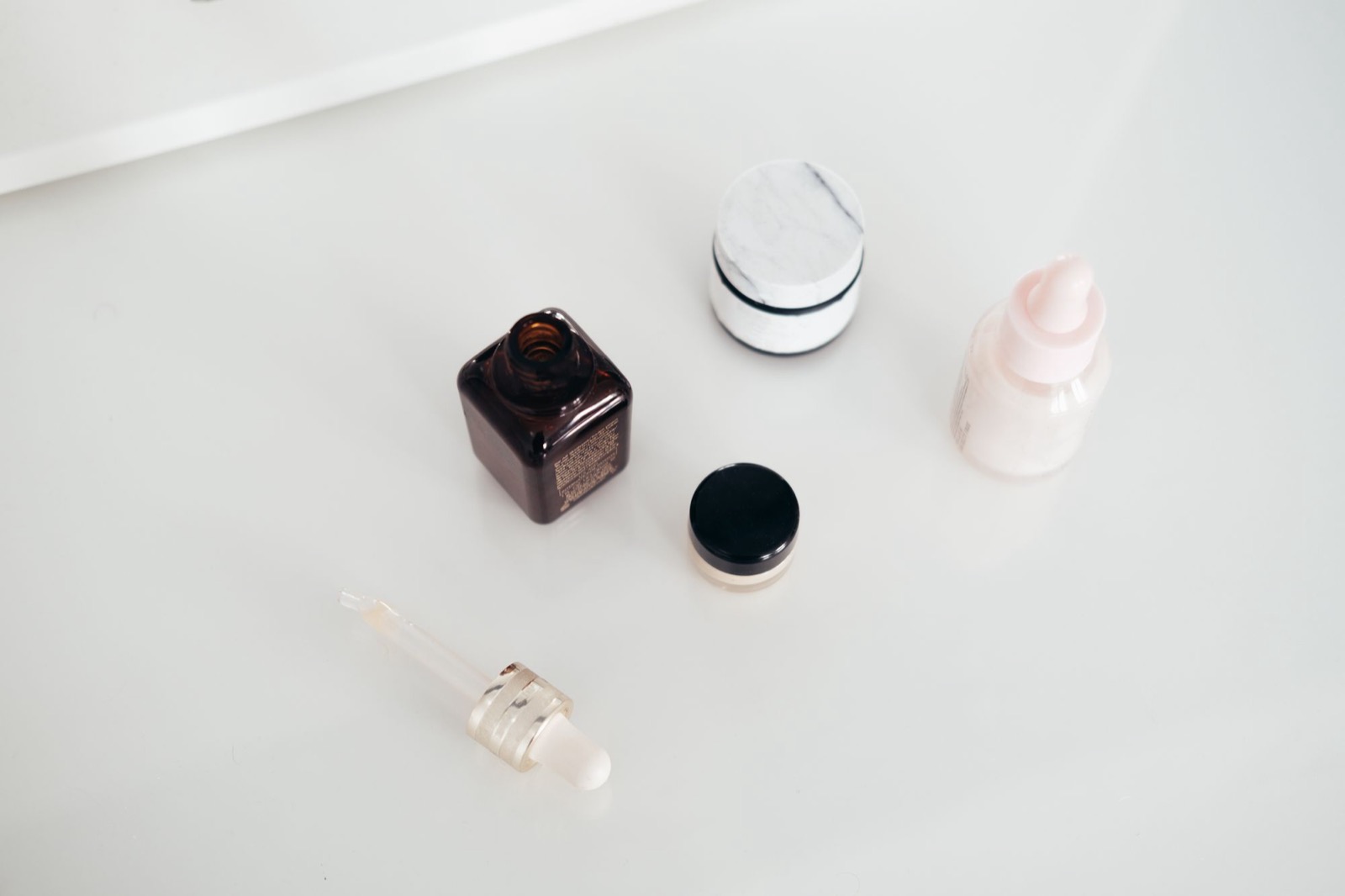
- Watch the color. Topical GHK-Cu is oxidation- and light-sensitive, which is why serums use opaque or airless packaging. If a product turns brown or dark green or throws a precipitate, that signals it has degraded and should be replaced.
- Drug-tested athletes: check before you use, do not assume it is cleared. GHK-Cu is a copper cosmetic peptide with no clearly defined anti-doping class, but anti-doping lists carry broad catch-all categories, so confirm your current status with your sport's anti-doping authority before using it, especially by injection.
How people take it, and where the real numbers live
If you are going to use it, the move is to match the route to the evidence and handle it well. For skin and hair, the topical serum is the best-supported form, and the beginner step is a several-day patch test on the inner forearm before it goes on your face or scalp. Store serums away from light and air, and replace anything that has discolored.
None of the handling matters if the vial does not contain what the label says, and the research-vial channel rarely comes with independent testing, so labeled and actual content can differ between suppliers. What is really in the vial is the assumption every other decision rests on.
Where to read more
This guide is the on-ramp. When you want more, the glow stack write-up covers the popular GHK-Cu plus BPC-157 plus TB-500 skin-and-recovery combo and what the combined evidence actually shows. The BPC-157 beginner guide and the TB-500 beginner guide cover the two peptides people most often pair it with for recovery. Injection-site rotation and skin helps with the skin side of injecting, and spotting high-quality peptides helps with the vial-quality problem. The GHK-Cu library entry is the quick reference for dosing ranges, storage, and sources.
How we sourced this, and the fine print
Every claim on this page is pinned to a source: the ex vivo human skin-penetration study, the mouse wound model, the recruiting Phase 2 topical-gel trial, a skin-biology review for the proposed mechanisms (flagged as coming from the ingredient's developer), and the NIH reference on copper and Wilson disease. The identity and cosmetic-ingredient details come from a general reference and are labeled as such. Where nobody has tested it in people yet, this guide says so rather than guessing.
For research and educational purposes only. Not medical advice.
pepSmart has not commissioned independent clinical review of this article.
More on how we write and source these guides: Editorial process and contributor disclosure and Sourcing posture.
Spot an error? Email corrections via /about.
Sources: 6 entries, primary and authoritative references (PubMed, ClinicalTrials.gov, and MedlinePlus/NIH) plus one general-reference secondary source for the ingredient's identity and cosmetic status, last reviewed 2026-07-13.
Related tools
- Injection-site rotation overview - Public overview of the Pro site-rotation planner.
- Protocol builder overview - Public overview of the Pro protocol builder.
- Peptide reconstitution calculator - Convert vial mass and BAC water volume into mcg/ml.
- BAC water calculator - Solve BAC water volume for a target concentration.
- Multi-dose vial calculator - Estimate doses per vial and a projected vial-empty date.
- Reconstituted-vial storage window calculator - Estimate a generic usable-window date and days remaining.
References
- [1] Wikipedia: Copper peptide GHK-Cu; a naturally occurring copper(II) complex of the tripeptide glycyl-L-histidyl-L-lysine, first isolated from human plasma by Loren Pickart in 1973, widely used in anti-aging and hair-loss-prevention cosmetics under the INCI name Copper tripeptide-1 (CAS 89030-95-5); general-reference secondary source (Wikipedia)
- [2] Hostynek, Dreher, and Maibach (2010): human skin retention and penetration of a copper tripeptide in vitro as a function of skin layer, Inflammation Research (PMID 20703511); applied to human skin ex vivo, about 136 micrograms of copper per square centimeter permeated over 48 hours and about 82 micrograms per square centimeter were retained in the tissue as a depot (PubMed)
- [3] Wang et al. (2017): GHK-Cu-liposomes accelerate scald wound healing in mice by promoting cell proliferation and angiogenesis, Wound Repair and Regeneration (PMID 28370978); in a mouse scald-wound model the GHK-Cu-liposomes shortened wound-healing time to 14 days and increased HUVEC (blood-vessel cell) proliferation by 33.1 percent (animal data) (PubMed)
- [4] ClinicalTrials.gov NCT07437586 (sponsor Hudson Biotech): a Phase 2, randomized, double-blind, vehicle-controlled, split-wound study of topical GHK-Cu (copper(II)-peptide complex) gel to accelerate re-epithelialization of standardized acute skin wounds in healthy adults; overall status Recruiting, estimated enrollment 60, no results posted (ClinicalTrials.gov)
- [5] Pickart and Margolina (2018): regenerative and protective actions of the GHK-Cu peptide in the light of the new gene data, International Journal of Molecular Sciences (PMID 29986520); a review by researchers at R&D Skin Biology (the ingredient's commercial developer) reporting that GHK increases collagen, elastin, and glycosaminoglycan synthesis, supports dermal fibroblasts, and has anti-inflammatory and DNA-repair actions in skin (PubMed)
- [6] MedlinePlus Genetics (US National Library of Medicine): Wilson disease; an inherited disorder in which excessive amounts of copper accumulate in the body, and copper is necessary for many cellular functions but is toxic when present in excessive amounts (MedlinePlus (US National Library of Medicine))
For research and educational purposes only. Not medical advice.